


Danfoss Scotland has announced the results of a validation programme for its Dextreme Max digital hydraulic system, installed in a 30-tonne battery-electric excavator. The project was undertaken with a £4.29 million grant from the UK Government’s Red Diesel Replacement Phase 2 Competition.
Testing showed that the Dextreme Max system reduced excavator battery energy consumption by 35% across a representative duty cycle mix compared to the baseline electric machine, corresponding to 53% longer runtime on a single charge. The programme was funded through the Department for Energy Security and Net Zero’s Net Zero Innovation Portfolio, which supports the development of low-carbon alternatives to red diesel in the construction, mining and quarrying sectors. The grant represented approximately 65% of eligible project costs, with Danfoss funding the remainder.
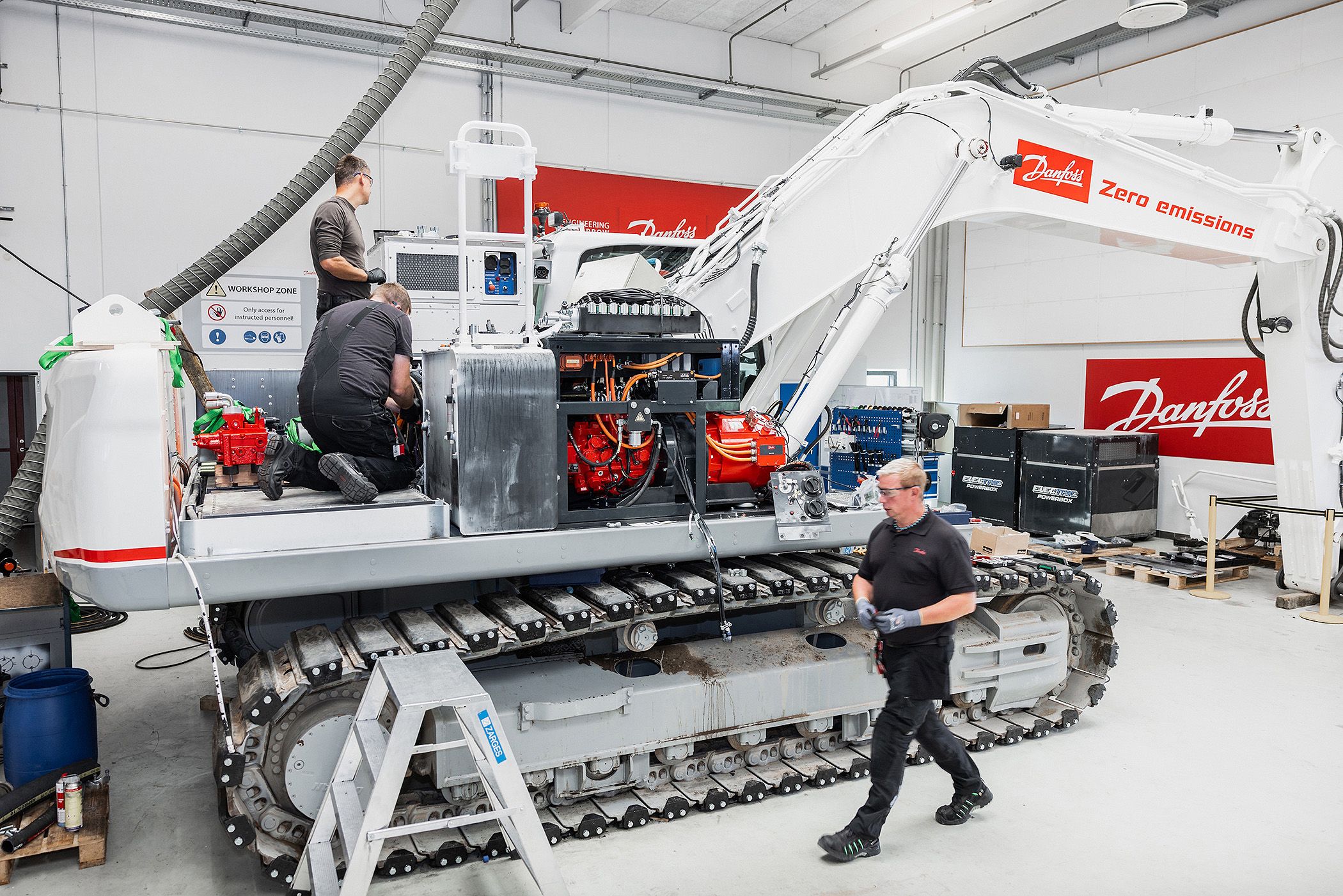
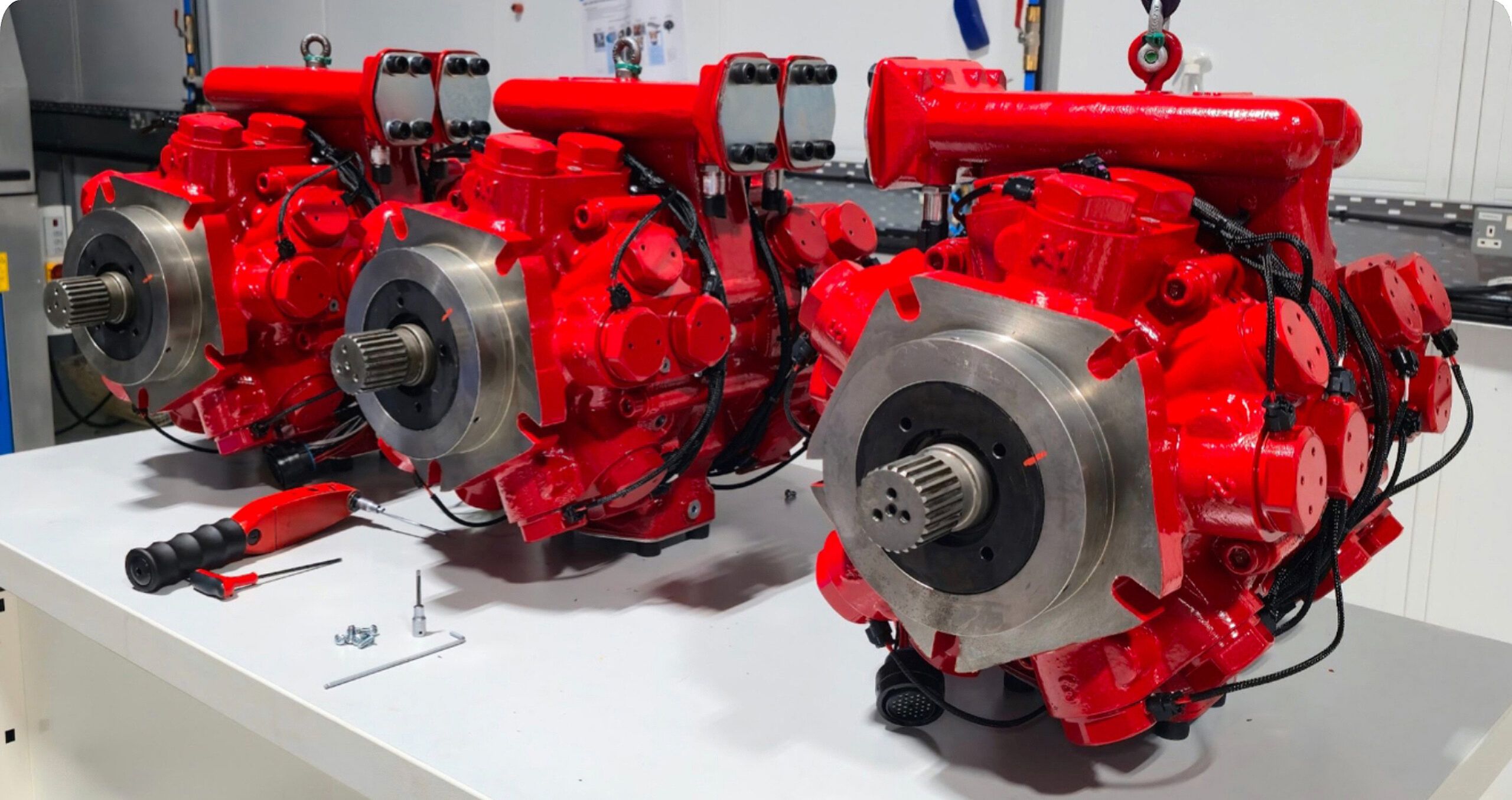
For the project, Danfoss selected a Develon DX300LC-7 crawler excavator. The machine was supplied in an electric configuration by Staad, which replaced the diesel engine with an electric drivetrain comprising a Danfoss Editron EM-PMI375 permanent magnet synchronous motor, EC-C1200 inverter, MC050 motor controller and three 140kWh batteries. Danfoss engineers then replaced the excavator’s conventional swashplate hydraulic pump with the DDP180D pump/motor, the central component of the Dextreme Max system. The DDP180D features multiple independently controlled outlets; on this application, the excavator’s four primary services — boom, arm, bucket and swing — are supplied through ten individually controllable outlets, dynamically grouped through a ganging block that reallocates capacity to whichever service requires it. A dedicated valve configured as a hydraulic H-bridge was developed for the boom function to allow independent metering, providing anti-cavitation, pressure amplification and energy recovery during overrunning motions.
Performance was assessed against the baseline electric excavator using JCMAS air grading and JCMAS air dig and dump test cycles, equivalent to ISO/AWI TS 11152-2. The Dextreme Max system reduced battery energy use by 49.2% in air grading and by 31% in air dig and dump, with negligible impact on cycle time. Assuming a duty cycle of 30% grading and 70% digging, the system would reduce battery power consumption by 35% without significantly affecting work rate — equivalent to 53% more operating hours on the same battery capacity, or similar runtime to the baseline machine using two battery packs instead of three.
“The results of this testing highlight the potential of digital hydraulic architectures to overcome the obstacles in heavy-duty machinery electrification. Electric excavators offer excellent responsiveness, smooth control, a quiet cab environment, and zero-emission operation. With Dextreme Max, they can also deliver the runtime, productivity, and total cost of ownership advantages required for wider adoption, thereby accelerating the decarbonisation of heavy-duty machinery,” says Alasdair Robertson, senior director of digital displacement at Danfoss Power Solutions. “We are extremely encouraged by these results, but there is more work to do. Further gains are possible, and we will continue optimising the system to maximise the energy savings and value for our customers.”
The Dextreme Max system is the third level of Danfoss’s Dextreme range, which also includes Dextreme Swap — a direct pump replacement offering improved system control — and Dextreme Flex, which introduces flexible outlet allocation to reduce flow distribution losses. Both Dextreme Swap and Dextreme Flex are commercially available. The Red Diesel Replacement Phase 2 project has advanced the path to commercialisation for Dextreme Max.
Image: Danfoss