


During a busy week at ConExpo in Las Vegas, Volvo CE president Melker Jernberg finds time to sit down with iVT to talk about new machines, tariffs, AI and the challenges around electrification
I meet Melker Jernberg on a cool, air-conditioned balcony in the Las Vegas Convention Centre Central Hall, overlooking ConExpo’s Silver Lot where, through the vast plate-glass windows, we can see construction vehicles of all kinds on display for the visiting crowds in the blazing Nevada sunshine.
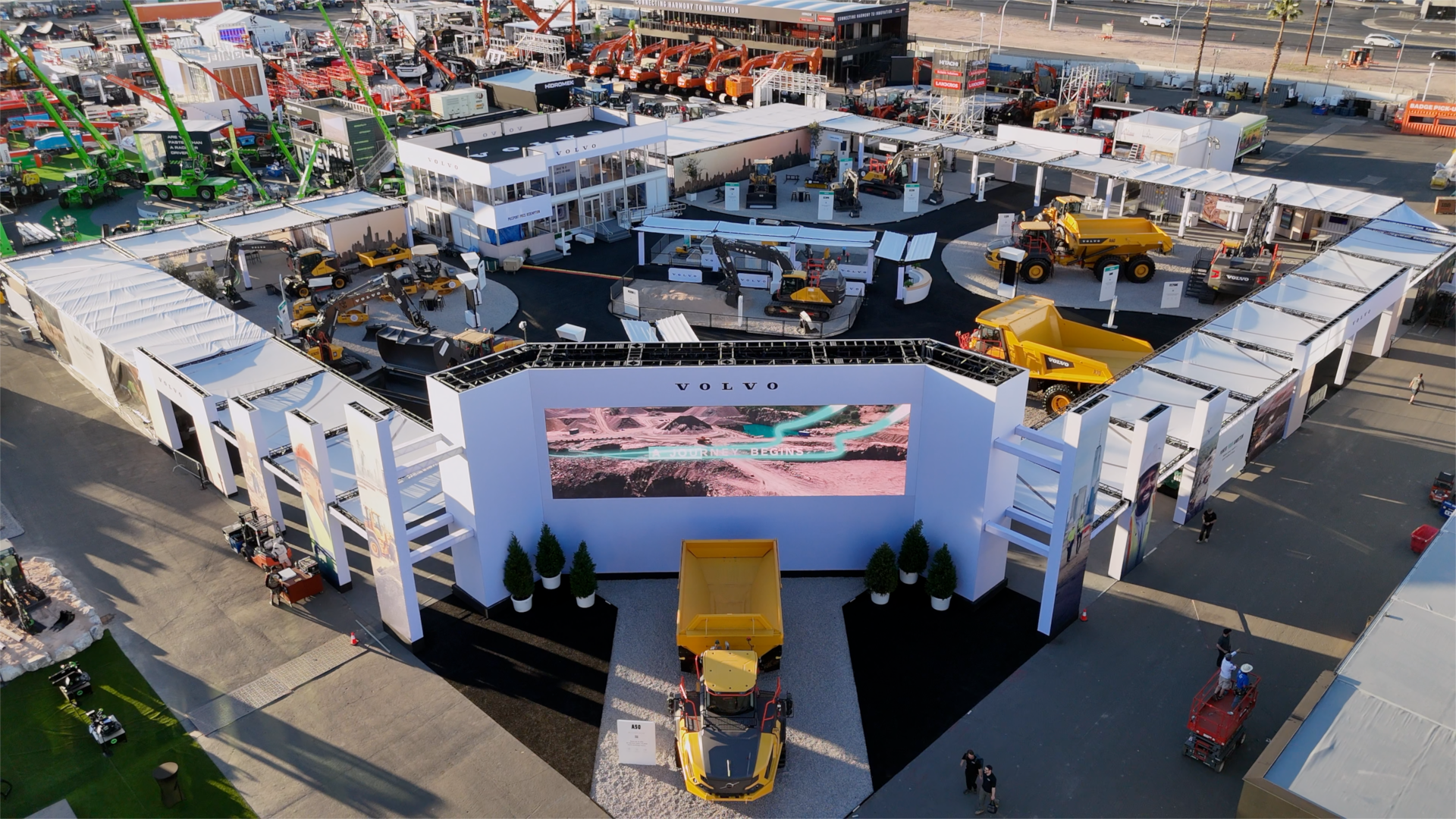
Not quite within view as we chat, but just beyond the iconic hotels visible on The Strip, is the Festival Lot where Volvo CE has just unveiled some of the latest additions to its lineup – including a new excavator and articulated haulers – as well as announcing the opening of a new production facility in Shippensburg, Pennsylvania.
I’ve had the pleasure of chatting with Jernberg several times before. His enthusiasm is always infectious and his demeanour never lacking in playful humour. As we sit down, he quickly reminds me of our first meeting in 2018, at Volvo CE HQ in Eskilstuna, Sweden, when he got me to show off my operating skills (or lack of) behind the controls of a 48-tonne EC480E. “Have you recovered from your excavator driving yet?” he smiles.
I remember being impressed by the size and power of the EC480E – the new EC560 crawler excavator launched in Vegas is similar, but a few steps up the range. It is designed for quarries, civil engineering projects and large-scale construction and weighs in at 56-tonnes. It comes with a 4.6m³ bucket, 3% more digging force and 10% more swing torque than its closest cousin, the older EC550E. It also has advanced electrohydraulics and a fully reimagined cab and HMI. “When we say this is new range, it’s new all over,” says Jernberg.
The machine is the first large crawler excavator for Volvo CE in its next-generation range, which began slotting in around existing machine offerings in 2024. It meets demand from customers – particularly in North America – for updates in this size class.
Also on display in Vegas is the 23-tonne battery electric EC230, which Jernberg notes, has performance that matches demanding applications without compromise, according to anyone who tries it out.
Another big announcement for Volvo is that it will start producing excavators and wheel loaders in a new facility in Shippensburg, Pennsylvania. Meanwhile work is due to begin on a new excavator plant in Eskilstuna later this year. “Then we will have the South Korea footprint, and we will have production in Europe,” says Jernberg.
“Reacting to tariffs is short-term, building a resilient structure is strategy”
The new US facility is backed by a $40 million investment, part of a wider $1.2 billion commitment from the Volvo Group to North American manufacturing. Given the political landscape in 2026, the announcement almost begs to be read as a tariff story, but Jernberg has a long-term rather than reactionary view, and says the decision on the new facility was taken some years ago.
“The decision was taken for a lot of reasons,” he says. “With the tariffs maybe it looks better, but we would have taken it anyhow. It’s extremely hard to run a big company and try to mitigate currencies or tariffs. Instead, we invest in products we believe in; the production footprint we believe in; the regional value chains we believe in; and have a supplier base that we believe in – a strong system will mitigate a lot of short-term political decisions.”
He lists the shocks the industry has absorbed in recent years: a pandemic, the logistical chaos of cargo backed up at sea, and now a fast-shifting trade picture. “When we create the system, we create it because we think it’s more resilient over time,” he says. “Reacting to tariffs is short-term. Building a resilient structure is strategy.”
Filling the gap: the new haulers
Another source of pride for Jernberg at ConExpo is Volvo’s new articulated hauler lineup (known as dump trucks in the US). “It’s a really good, full upgrade,” he says. “We’ve upgraded everything from the transmission and cab to the productivity features, with new cameras and safety technology.
“We are the global market leader in articulated haulers, and with this new generation, I’m quite confident we will continue to be that.”
A new model in the range sits between the existing 40-45-tonne machines and the 60-tonne A60. “We have taken the opportunity to fill the gap,” says Jernberg. The new A50 – a 50-tonne machine – has again been conceived with the North America in the frame.
The range’s all-electric version, first shown in prototype form at Bauma a year ago, is not in Vegas – but, as Jernberg reveals, it is now close to full production. “We are doing the first real customer piloting now,” he says. “And we’ll do the last really tough customer piloting in the UK.”
At your service
One of Volvo’s new sales messages is that the services and digital tools it offers are nearly as important as the vehicles themselves. “A solution for me is not only a machine, you also need to have a service,” says Jernberg. “If you have a good machine, and you connect it to good services, with good people, then you have a great solution. I’m really proud that we do that.”
Inside an immersive site office at ConExpo, Volvo experts show how tools like Load Ticket, Connected Map and ActiveCare Direct transform raw data into uptime and safety. Those seeking flexible fleet options can learn about Volvo CE’s growing Equipment as a Service (EaaS) model, which offers guaranteed availability and predictable costs with a simple pay-for-use structure.
“A solution for me is not only a have a machine, you also need to have a service”
Volvo believes that when the right machines backed by the right services its customers can work safer, more productively and lower total costs of ownership.
The wheel loader updates at ConExpo are a good example of that philosophy in practice. The mid-size L60, L70 and L90 now get Volvo CE’s Reverse By Braking and OptiShift technologies – previously reserved for larger-class models – cutting fuel consumption by up to 15%. The L120 Electric has had its braking and rimpull control systems substantially upgraded, and now comes with a dedicated waste handling package following strong take-up in that sector. At the compact end, the third-generation L20 Electric and L25 Electric are now available in North America for the first time, both with a 21% increase in battery capacity and, after direct customer feedback, with air conditioning as standard.
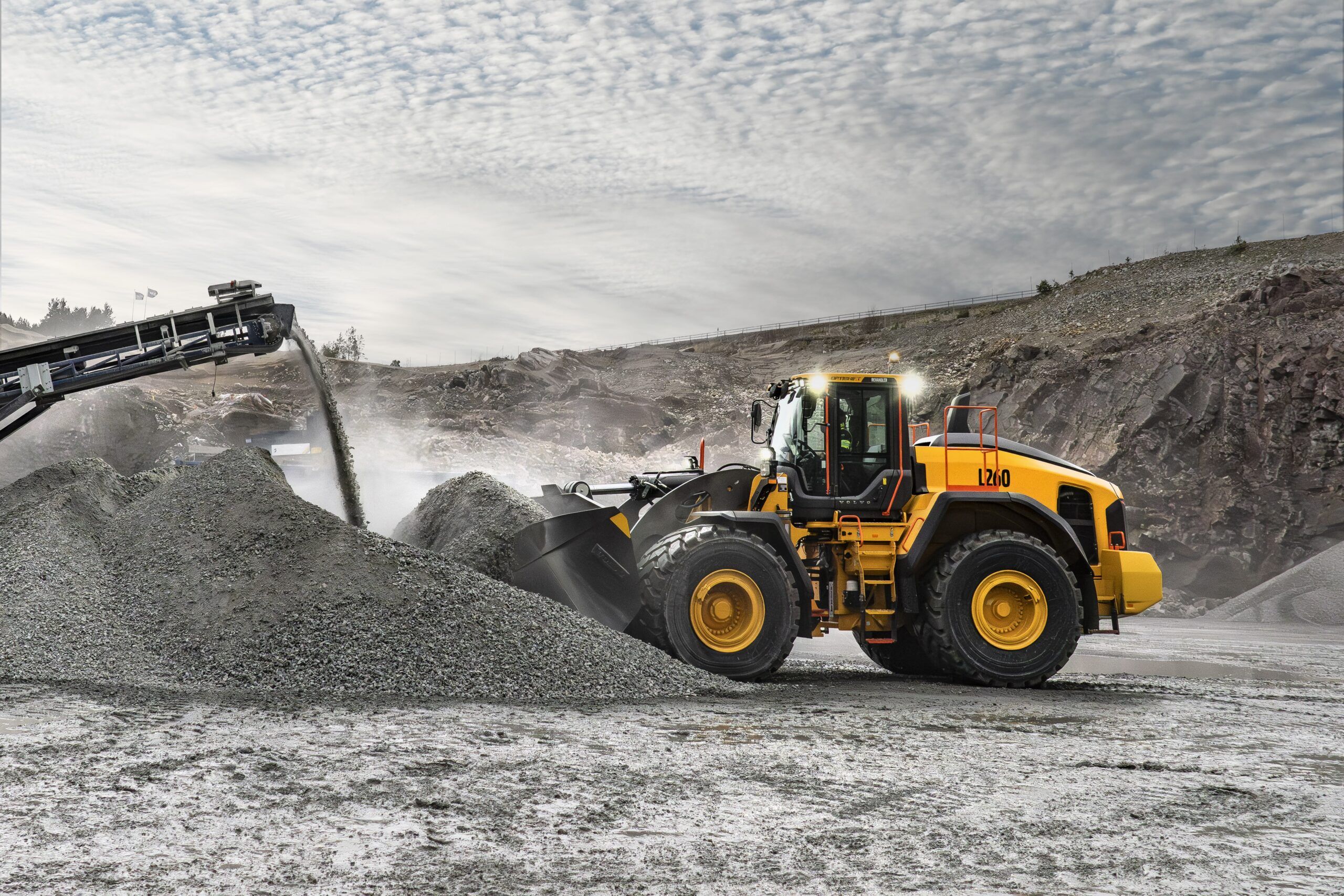
Sitting above the machine updates is a new certifiable on-board weighing system for wheel loaders. Verified to a standard accurate enough for direct invoicing, it means trucks can bypass site scales entirely: the loader generates a digital Load Ticket that goes straight to a customer’s ERP software.
AI and electrification
With some OEMs touting AI enhancements as the solutions to vehicle-control challenges, I ask Jernberg if Volvo CE has any AI capabilities in the pipeline. “On purpose, I didn’t even mention AI during my whole presentation,” he says. “Because I don’t think the customer could care less if it’s a good machine. If we use AI in a good way, we can be better and quicker in developing a machine. The outcome is what matters for customers.”
That, he stresses, is not the same as standing still. “We are working hard with AI, both when it comes to internal efficiencies, our digital platform, our product development, all of that. We just stayed away from using it in the communication.”
Meanwhile, Volvo CE continues to be a world-leader in battery electric machines, however, the conversation around electrification, Jernberg says, has changed almost beyond recognition.
He tells the story of attending the World Economic Forum in Davos. “Last year, sustainability was extremely high on the agenda,” he says. “The main hall – 1,300 people, full. This year, the same topic: 50 people. Because everyone was talking about AI.”
The word sustainability has quietly slipped out of the language used by cities, companies, countries and organisations. The save-the- planet pitch has not so much failed as moved aside. “But if electrification has disappeared from a planet perspective, it has increased from a logic perspective,” says Jernberg. “Even here in the US, there are more discussions and interest in electrification than you’d think. But it’s based on: what’s the autonomy? How long can I drive? How do I charge? It’s not coming from ‘I should be a green company.’ It’s: ‘Will it be better for me?’.”
The flip side is uncomfortable economics. “I spend a big part of my R&D budget on electrification, and I don’t sell so many machines,” he concedes. “Short term, you may say that’s not so smart. But I’m confident this will come, so we preinvest.” New technology, he points out, advances in steps rather than smoothly. The EC230 Electric on the booth is a case in point – its battery autonomy has gone from four to more than eight hours. “That’s a leap,” he says.
Still climbing into the cab
Anyone who has met Jernberg in the last few years will know he is unusually hands-on for a president of a global OEM. I ask him whether he still finds time to drive the machines. “I do,” he says. “And I tease my management team – partly fun, but this is also our business, right? I always say that I’m a quite good operator, but compared with my team, I’m a pro!” He pauses, then laughs. “Just to stress them a little bit.”
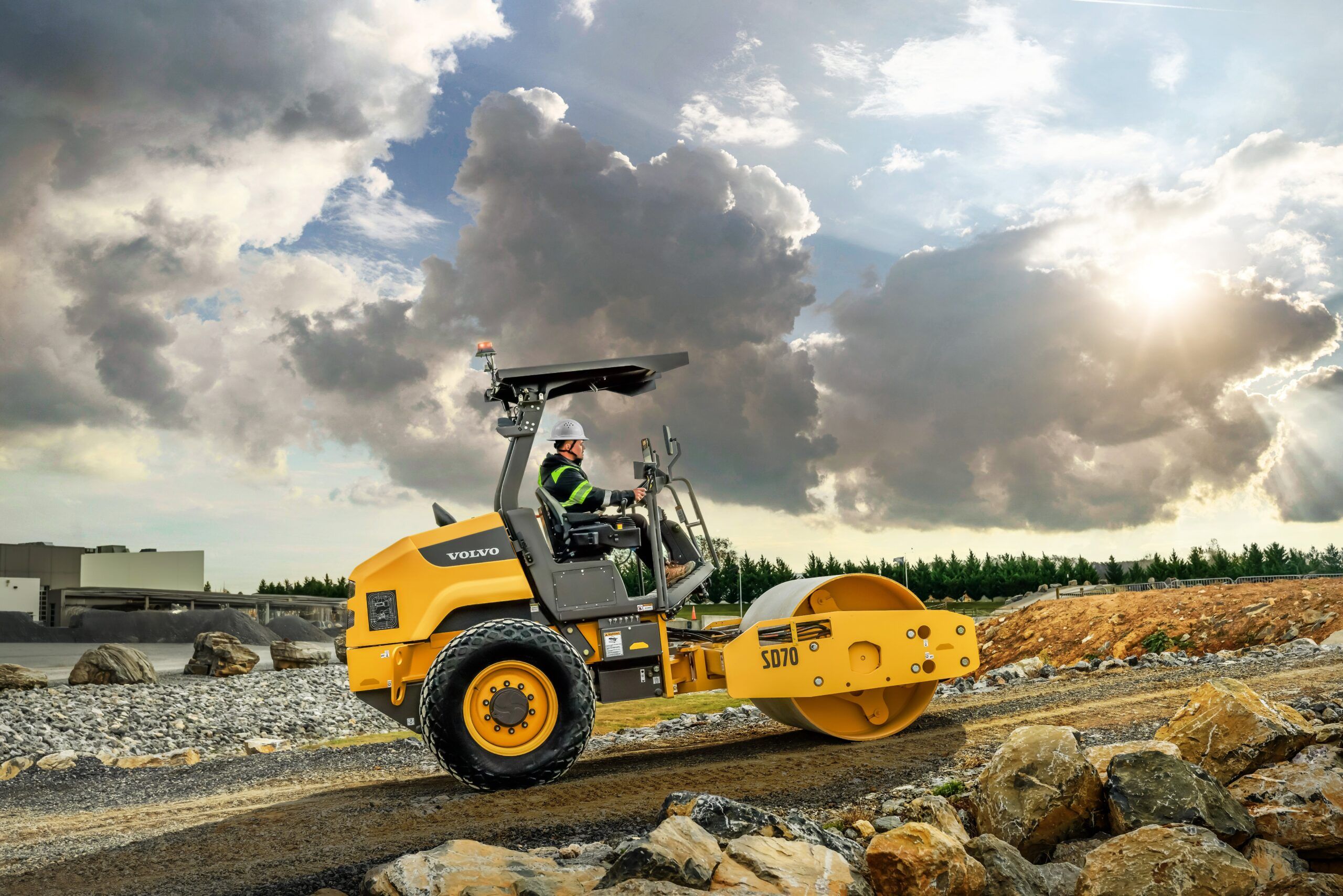
The last machine he drove, he says, was the electric EC230 in Eskilstuna a couple of weeks earlier, when customers were on site. “I wanted to see if there was a difference or not,” he says of the upgrades – chiefly the new battery system. The verdict is unambiguous, and revealing of how he thinks about the operator experience.
You feel, perception-wise, that you are a better operator when you go into the electric machines, he says. “You feel that you are more precise. There are actually no disadvantages at all.”
I suggest, only half-joking, that an electric excavator might flatter my own modest skills behind the levers. Jernberg considers this for a moment. “I’m not sure it will be enough, though,” he laughs.
Fair. The booth is filling up; he has another customer to meet, and I have a walk to the South Hall to shoot a video with an engine manufacturer. As he heads back to the stand, the man whose company has just unveiled a new excavator, a new factory and a host of other new vehicles, services and upgrades is still talking about the next time he will climb into a cab – in two weeks from our meeting he will get to test that electric articulated hauler, that was first seen as a prototype in Bauma. “I tried the prototype in the beginning, but then it was not ready.” he says. “Now I will test the market-ready product.”
He clearly cannot wait. “It’s ready,” he says. And as the economic case for such machines grows, so is the world. Even if it sometimes doesn’t seem to know it yet.
This article first appeared in the May/June issue of iVT