

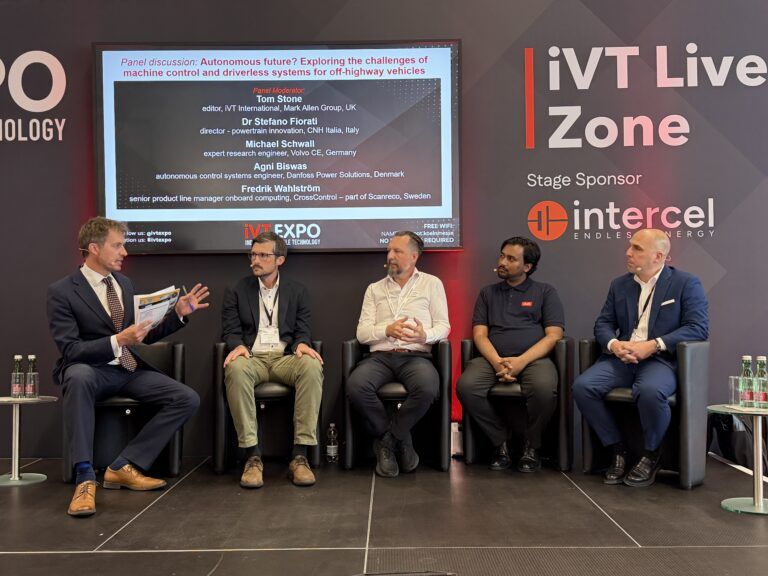
iVT International hosted a panel session titled Autonomous Future? Exploring the Challenges of Machine Control and Driverless Systems for Off-Highway Vehicles at iVT Expo Cologne, bringing together experts from across the off-highway sector to debate the state of autonomous systems, the challenges of scaling them, and the regulatory pressures shaping their development.
The session, moderated by iVT International editor Tom Stone, featured panellists Michael Schwall, expert research engineer at Volvo CE, Dr Stefano Fiorati, director of powertrain innovation at CNH Italy, Agni Bawas, autonomous control systems engineer at Danfoss Power Solutions and Fredrik Wahlström, senior product line manager for onboard computing at Cross Control, part of Scanreco.
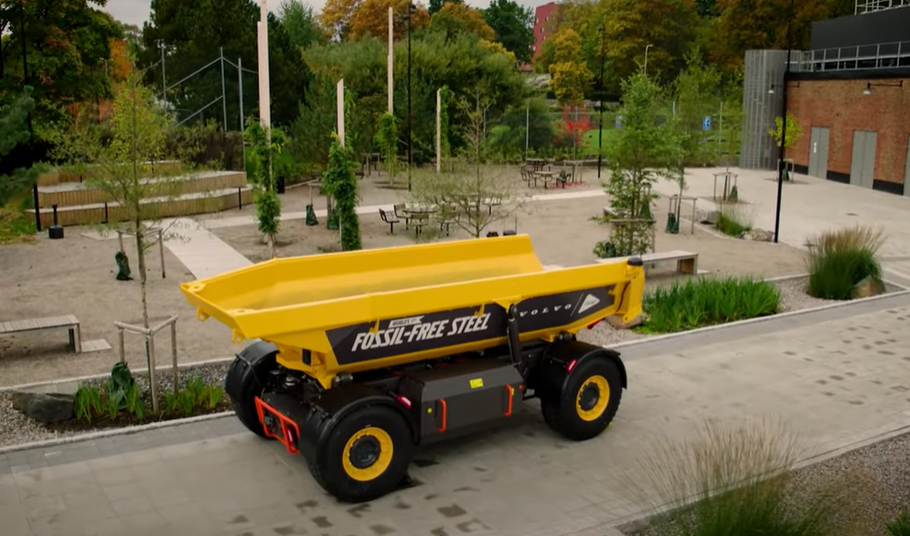
Schwall opened the discussion by framing the industry’s current position. “I think we are at the beginning of a quite exciting journey,” he said, pointing to autonomous hauling as the proving ground from which the sector has drawn its earliest lessons. The Volvo HX01 autonomous hauler — already in commercial operation at quarry and mining sites — was cited as an example of a solution where productivity and safety imperatives created the conditions for autonomous deployment to take hold.
Dr Fiorati broadened the picture to agriculture. “We are definitely looking at the automation of machine functions in a way that we start to build the steps towards autonomous,” he said, noting that tractor–implement combinations and self-propelled machines operating in the field present their own distinct challenges.
Wahlström highlighted the role of the operator interface — an element he argued is often overlooked. Even in autonomous operations, he noted, machines require some form of interaction, whether via radio control or a graphical user interface, and that need does not fundamentally change with the level of automation.
The panel identified validation as one of the most significant barriers to progress. Bawas argued that the core challenge is not making a system work, but understanding the conditions under which it will fail. “Autonomy inherently is a probability-based game,” he said. “The biggest challenge is not to make something work, but figure out what are the conditions under which the system will fall apart.”
Construction was singled out as a particularly complex environment, with Fiorati noting that unlike agriculture — where the field is a defined environment — construction machinery actively modifies the terrain it operates in. Schwall agreed, adding that the next frontier for Volvo lies in machines that can sense and interact with material, such as excavators and wheel loaders, rather than simply navigating a site. “It gets even more complex if you imagine that an excavator needs to take material — it doesn’t know what kind of material, it doesn’t know the physics,” he said. “This is the next step towards autonomy.”
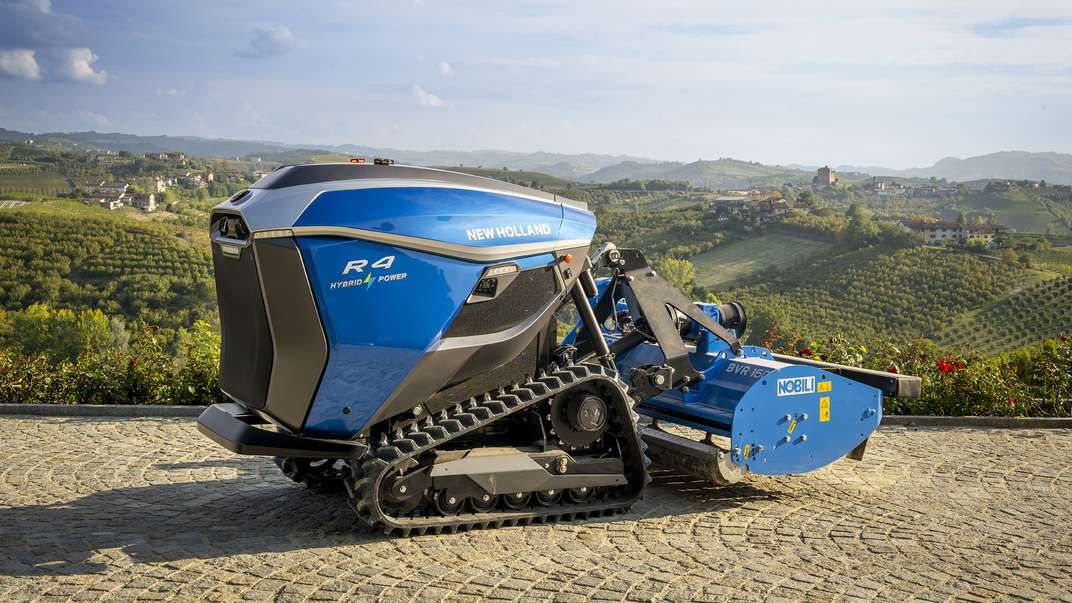
Discussion turned to the New Holland R4 Electric Power cabless tractor, developed by CNH for use in high-value crop environments such as vineyards and orchards. Fiorati described the machine as a response to two concrete customer pressures: a shortage of skilled labour and a narrowing operational window driven by climate change, which requires tasks such as chemical treatment to be performed immediately after rain. The platform is fully electric, capable of operating in GNSS-denied environments using a combination of lidar and vision guidance, and can collect crop data alongside performing field operations. The removal of the cab also eliminates operator exposure to chemicals — an additional benefit for that segment.
On the question of standards and interoperability, the panel broadly agreed that standardisation is necessary but must be approached carefully. Wahlström called for open standards and cross-industry collaboration to avoid proprietary lock-in, arguing that no single OEM can sustainably develop every element of an autonomous system in isolation. Bawas and Fiorati both supported standardisation at the level of functional interfaces and communication protocols, with Fiorati pointing to the Agricultural Electronic Foundation’s work on tractor–implement communication via ISOBUS as a model for how consensus can be built across competing manufacturers, albeit slowly.
Schwall introduced a note of caution around the word “open”, arguing that machine manufacturers must remain involved in any integration process. “If open means that the machine manufacturers are not involved in this kind of integration anymore, then it’s a no from our side,” he said. “We need the experience and the expertise on the machine side — how it is actually deployed on site, how it’s used. We need the experience and expertise on the robotic side, and they need to work together.”
On liability, the panel explored who bears responsibility when an autonomous system fails. Fiorati argued that the OEM, as the entity that understands how the system operates in the field, is best placed to drive that conversation and set requirements based on customer needs.
Schwall, however, noted that responsibility is not always straightforward, pointing to scenarios involving third-party retrofitting, where modifications change the fundamental nature of a machine and may require the type plate to be renewed — potentially shifting liability away from the original manufacturer entirely. “Regardless of responsibility, if something happens, it will be our name on the machine. So naturally, we have a high interest that the solution that is out in the field is safe.”
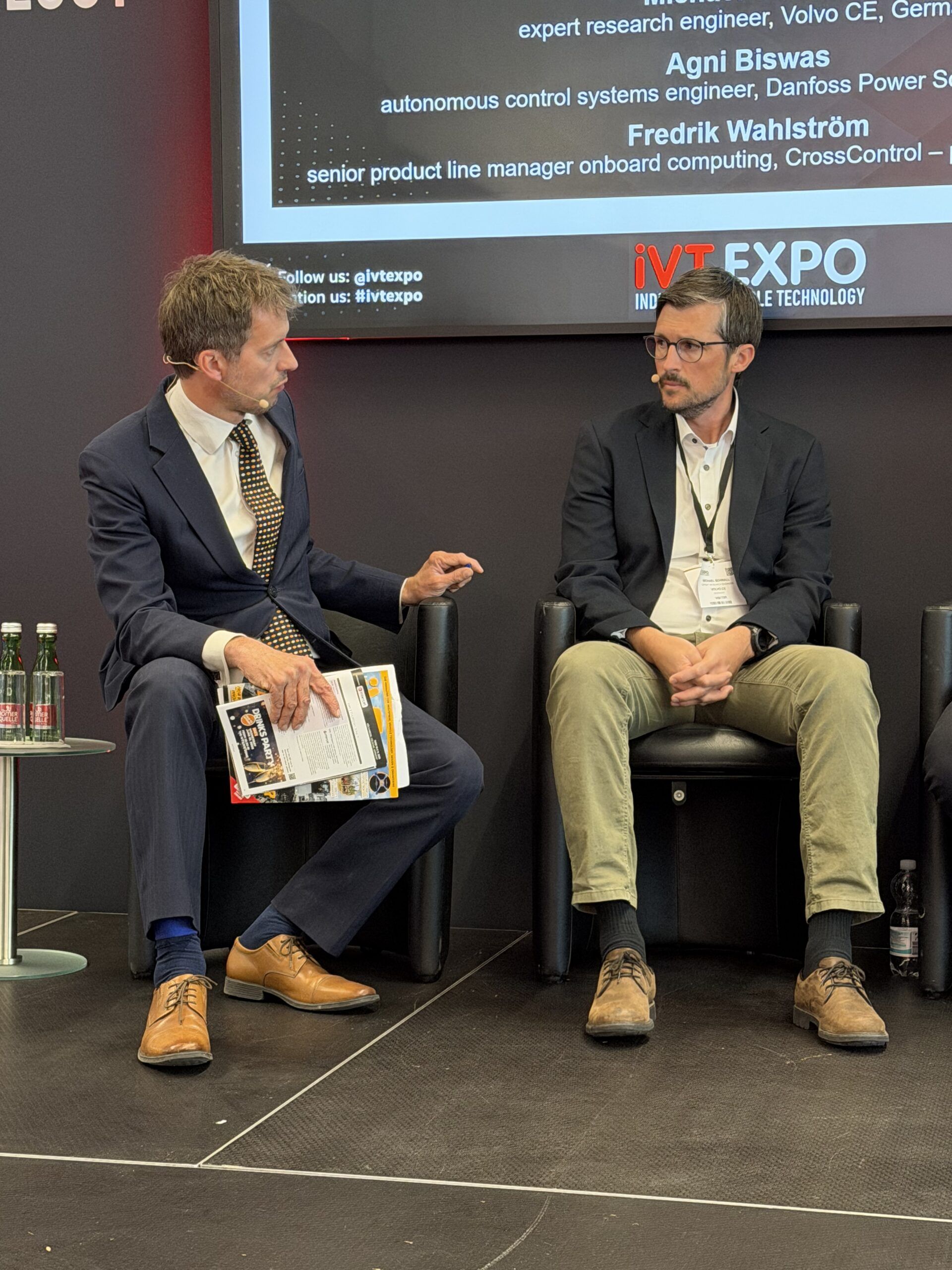
Bawas characterised the question in engineering terms, describing safety as a problem of operational boundaries: failures typically occur not because a single subsystem malfunctions, but because of disconnects between subsystems that were not caught during safety analysis.
With the EU machinery regulation coming into force in January 2027, and AI Act requirements applying to high-risk AI-based functions on top of that, the panel also addressed the regulatory horizon. Bawas described the AI Act as a framework that will help define and formalise operational design domains — the bounded conditions within which a system can be expected to function — and pointed to validation of AI-based systems as a particular challenge, especially where training data and labelling practices may later be called into question.
Schwall was direct on the role of machine learning in addressing some of the hardest problems facing the sector. “You cannot implement rule-based algorithms that will mimic the behaviour of an excavator,” he said. “You need algorithms that are capable of understanding the environment, evaluating sensor data, and actually performing the operation. The only solution that we have seen so far is the use of AI — with all the challenges when it comes to safety and security.”
Closing the session, Fiorati flagged self-diagnosis as an often-overlooked capability that will be essential for fully autonomous machines. A vehicle operating without an operator, he argued, must be able to monitor its own functional envelopes and communicate deterioration before it reaches a point of failure — otherwise it simply stops in the field with no indication of what has gone wrong. Bawas tied this back to the interface question: even a fully autonomous machine, he noted, will ultimately need some form of user interface to communicate its state.