

Caterpillar used its keynote address at CES 2026 to unveil an AI-powered assistant for equipment operators and preview five autonomous construction machines, while committing $25 million to workforce development.
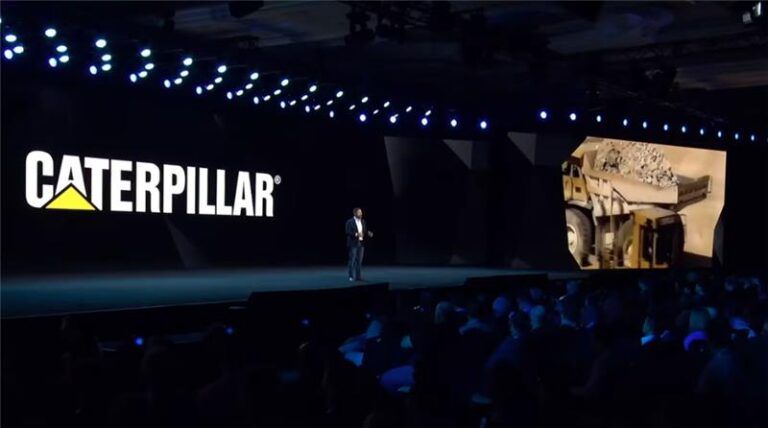
The keynote address, which took place on Wednesday, 7 January in the Palazzo Ballroom at the Venetian, was led by Caterpillar CEO, Joe Creed who detailed a conversation on the company’s legacy of innovation and how the team is transforming the customer experience with advanced technology.
“Caterpillar’s legacy of innovation is rooted in solving our customers’ toughest challenges, and that mission continues to guide our future,” said Creed. “Technology is accelerating and expanding our ability to meet customer needs by seamlessly connecting deep digital insights with our machine expertise to deliver solutions for their most critical tasks.”
The Cat AI Assistant, launching this quarter, allows operators, technicians and fleet managers to interact with equipment using speech, text, images or video.
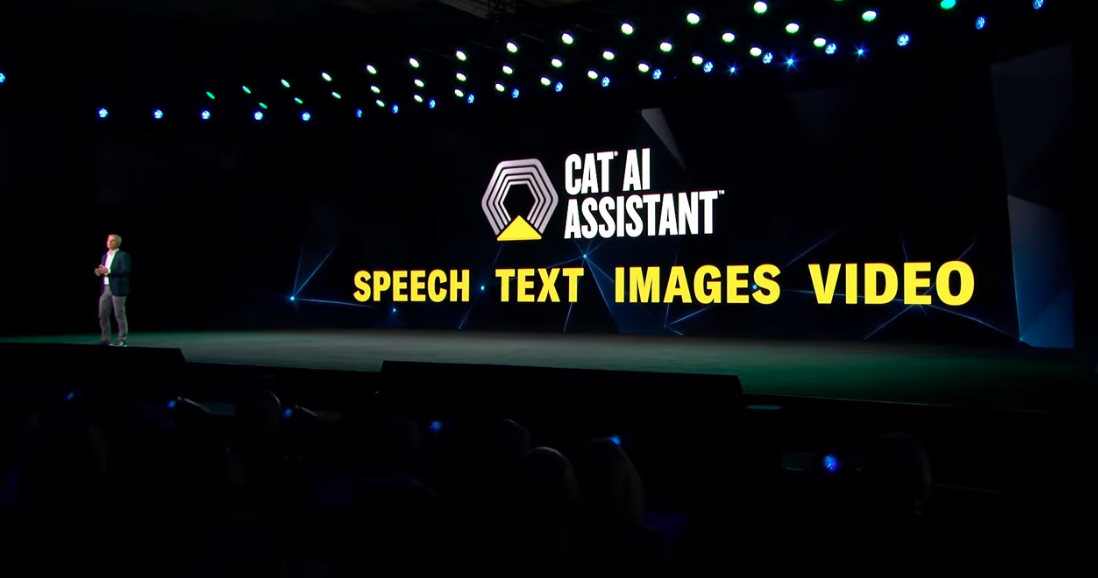
“Cat AI assistant will be a major leap forward in how Caterpillar supports customers through digital solutions,” said Auggie Redzig, chief digital officer at Caterpillar. “It’ll make it easier for customers to buy, to maintain, manage, and operate their equipment. Doesn’t matter whether they’re working from corporate headquarters or remote job site.”
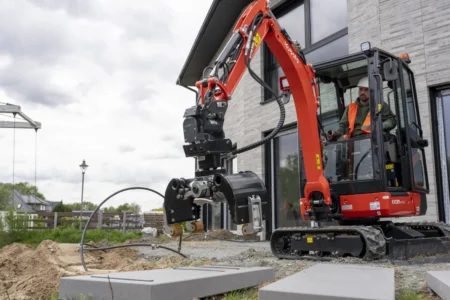
The system demonstrated capabilities including fuel efficiency monitoring, maintenance scheduling, parts identification and real-time safety interventions. In a live demonstration, the AI assistant set a 13ft ceiling limit for a mini excavator working near overhead power lines, automatically slowing the machine as it approached the boundary.
“This technology will dramatically simplify operating a machine. It will improve productivity and it will help keep people safe,” Redzig said.
The AI assistant runs on Caterpillar’s Helios platform, which processes data from approximately 1.5 million connected assets globally and houses more than 16 petabytes of data. The system is powered by Nvidia’s Thor AI robotics platform, enabling on-machine intelligence that functions in remote, off-grid locations without requiring constant cloud connectivity.
Deepu Talla, vice president of robotics and edge AI at Nvidia, joined Creed on stage to discuss their expanded collaboration.
“Caterpillar is inventing a new software-defined industrial vision for the heavy industry,” Talla said. “CAT AI will be the digital to physical bridge that will close the skills gaps or onboard new hires with the knowledge virtually of a 100-year industry expert. This means more uptime, higher levels of safety, fewer mistakes and avoids costly downtime.”
The partnership covers AI assistants, autonomous machines that process data at the edge, and digital twins for design and testing.
Chief technology officer Jamie Miner unveiled plans for five autonomous construction machines – a wheel loader, dozer, haul truck, excavator and compactor. The announcement extends Caterpillar’s three-decade autonomy programme beyond mining into construction.
“Construction represents a far greater opportunity for autonomy,” Miner said. “These are the job sites you see every day in your communities. Dynamic, complex environments where the work is highly visible, the volume is massive, and the impact on people’s lives is profound.”
Miner highlighted the safety imperative, noting that while construction employs less than 5% of the US workforce, it accounts for over 20% of workplace fatalities.
Caterpillar’s autonomous mining fleet has moved over 11 billion tons of material and travelled more than 385 million kilometres autonomously – “over twice the autonomous mileage of the automotive industry without a single reported injury,” according to Miner.
Creed also announced a $25 million commitment to workforce development, addressing concerns about AI and automation displacing workers.
“As the invisible layer of the modern tech stack gets smarter, the people who build and run it don’t disappear. In fact, they actually become more visible,” Creed said. “New roles are going to emerge, skills are going to evolve, and our people, our people, not the machines, are going to stay at the centre of what we do.”
The funding will support training, education and partnerships with customers, dealers, schools and community organizations to help workers transition into roles created by new technology.
Creed framed Caterpillar’s CES appearance around the concept of an “invisible layer” – the physical infrastructure that enables digital technology.
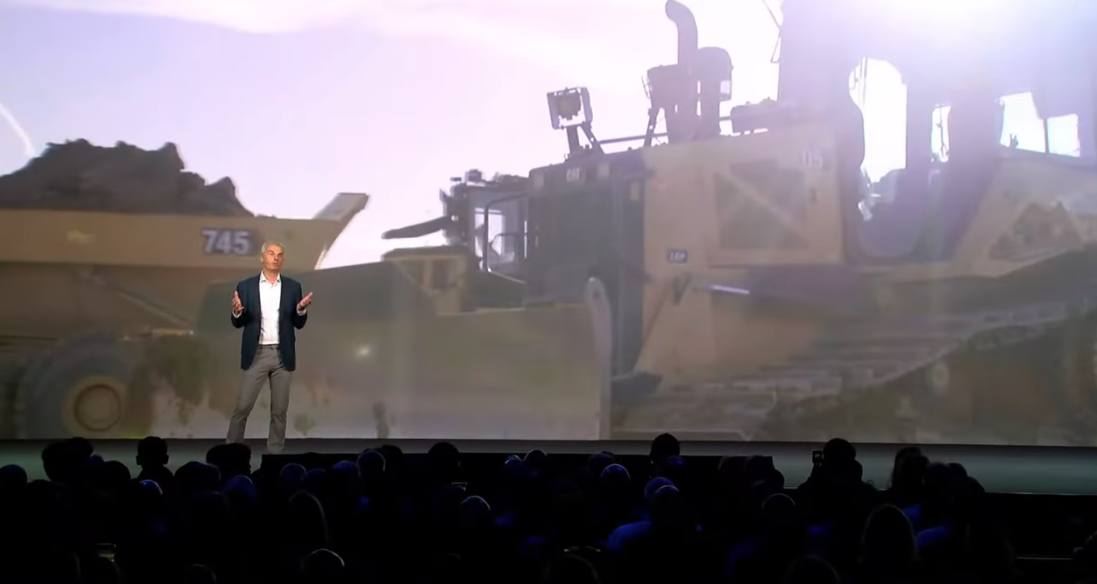
“The digital world depends on a physical layer most people never think about,” he said. “Every device in this room that you have depends on minerals that had to be pulled from the ground. Every data centre behind the AI you’re going to see this week or you’re going to hear about this week was constructed from the ground up and it stays online with power systems that provide reliable electricity.”
He positioned the company’s evolution alongside Nvidia’s role in AI. “You all experience the chatbot. You use the co-pilot. You use the image generator. But underneath all that, it’s Nvidia’s accelerated computing platform that makes it all possible. Caterpillar is that for the physical world.”
“The company launched a new strategy in November 2024 with a mission statement focused on solving our customers’ toughest challenges,” according to Creed.
Caterpillar is exhibiting in the West Hall at CES throughout the week, with the CAT AI-enabled mini excavator available for demonstration at booth 5019.
Image: Caterpillar