

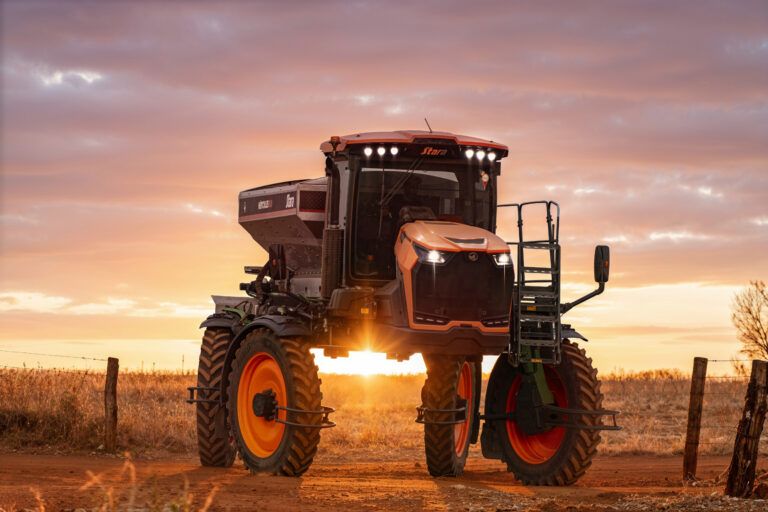
Stara has equipped its new Hércules 9.0 self-propelled spreader with the Volvo Penta D8 engine, with the Brazilian agricultural equipment manufacturer reporting working speed gains of 10-15% and fuel consumption reductions of 15-20% in customer operations.
The Hércules 9.0 is was display at Agrishow last week (27 April- 1 May) in Brazil and represents the latest addition to Stara’s Hércules range, expanding the lineup with a higher-capacity machine. The new model features a 9-tonne fertiliser hopper to reduce refill time.
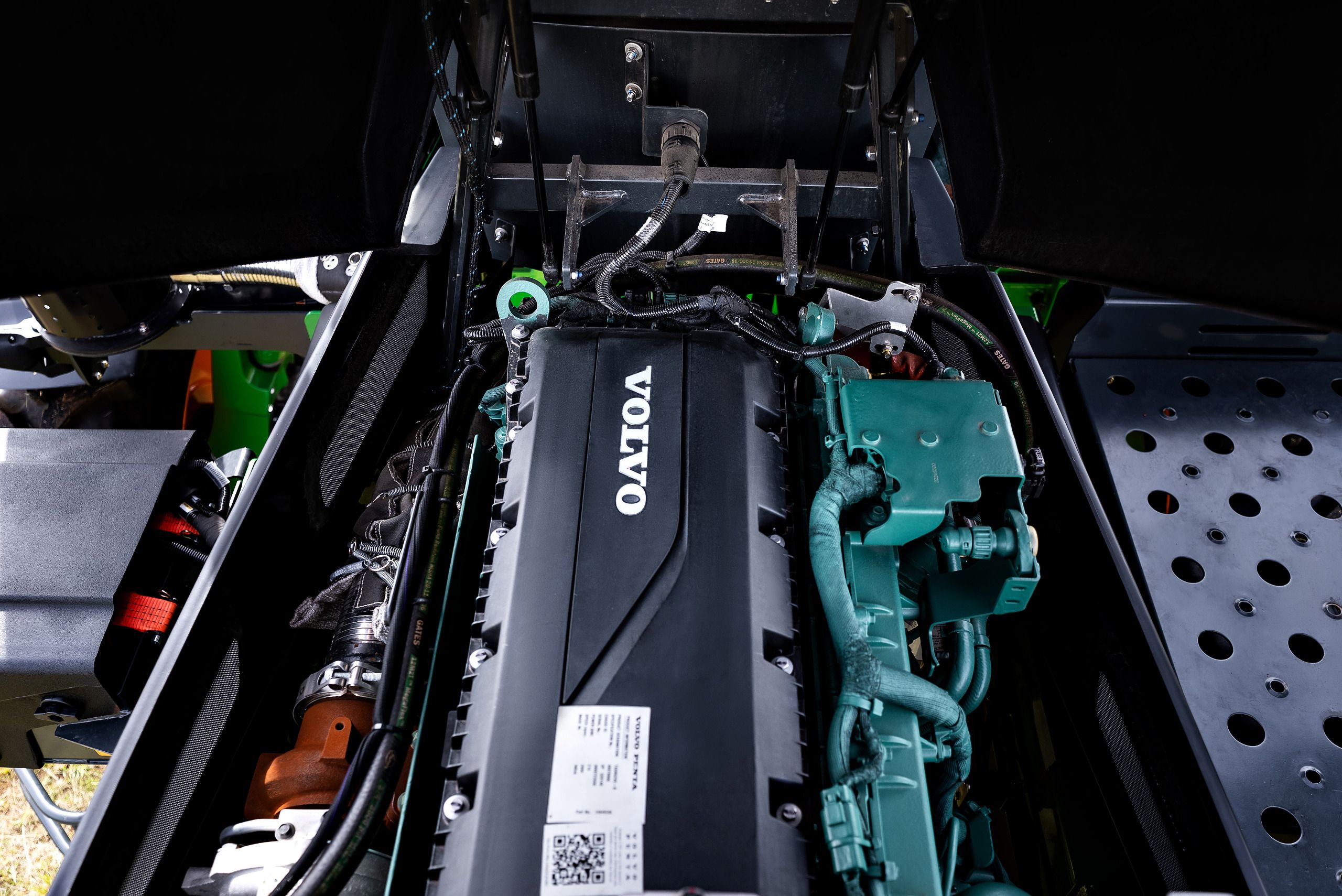
Stara selected the D8 engine for its power density and torque characteristics at low engine speeds. By operating effectively at lower rpm, the engine helps reduce fuel consumption and supports smoother machine operation.
“Stara customers who have been operating the Hércules 9.0 with the Volvo Penta engine are experiencing clear productivity gains,” says Cristiano Paim Buss, director of research and development at Stara. “Machines equipped with the Volvo Penta D8 are achieving increases of 10–15% in working speed, while reducing fuel consumption by around 15–20%, depending on terrain conditions.”
“The strong, steady engine torque allows the machine to operate at a consistent speed, enabling an even spread,” says Gabriel Barsalini, head of Volvo Penta Brazil. “The power density of the proven D8 and the robustness of the Volvo Penta solution have impressed Stara and its customers.”
In 2025, 11 pilot Hércules 9.0 spreaders were delivered to key customers across Brazil and monitored in various working conditions to validate product performance and reliability. Following this testing phase, serial production began, with the first units due to arrive with customers this month.
“The main advantages we’ve seen using the Volvo Penta engine are reliability, robustness, and low fuel consumption,” says Cristiano. “The engine allows operation with high torque at low RPM, which reduces fuel consumption. The system is very well matched with the machine’s distribution system, delivering efficient performance in the field. Another benefit is reduced noise, as the engine operates at lower RPM. This ensures acoustic comfort and less vibration inside the cabin.”
On the working partnership, Cristiano adds: “The partnership with Volvo Penta has proven to be extremely positive, mainly due to their proactive and agile support approach. Communication between teams is constant, ensuring quick responses and real-time technical alignment. Another important point is Volvo’s openness to listening and working together to make adjustments where needed.”
“Hércules and Volvo Penta both have a very strong reputation, which helps maintain the established image and quality of both brands,” adds Gabriel. “The engine is a very important component of Stara’s products, and we see our partnership as a long-term relationship. Volvo Penta believes that by maintaining the current performance and alignment, there is great potential to expand this partnership in the future.”
Image: Volvo Penta