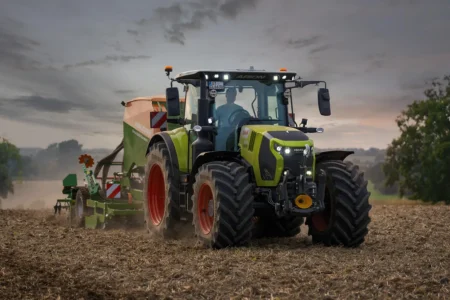


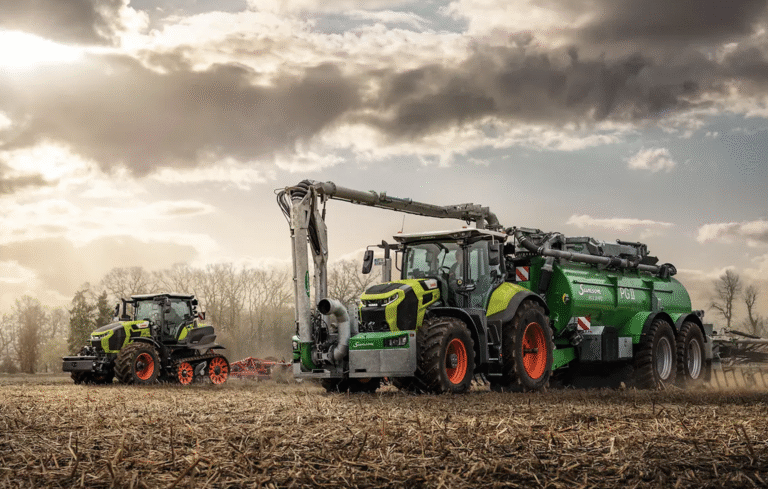
Claas is replacing its Axion 800 series with three large tractors in the new Axion 8 Cmatic range, which the manufacturer will launch in summer 2026. The three models have maximum power outputs ranging from 240 to 290hp, rising to 264 to 313hp with Dynamic Power.
All models are powered by the latest-generation NEF 6.7 six-cylinder engine from FPT, with a displacement of 6.7 litres, maximum power of 264 to 313hp and maximum torque of 1,132 to 1,282Nm. Claas says peak power and maximum torque are available across a wide rev range and at low engine speeds. The Dynamic Power management system, part of the new Cemos Auto Powertrain, automatically adapts engine power to the operating situation and distributes it via the gearbox, power take-off shafts, hydraulics and auxiliary consumers as required. The system analyses electrical power requirements and optimises settings, which the company says supports productivity and lower fuel consumption at full and partial load. It works with the Cmatic continuously variable transmission and Auto Droop, also part of Cemos Auto Powertrain, which adjusts engine droop to conditions of use.
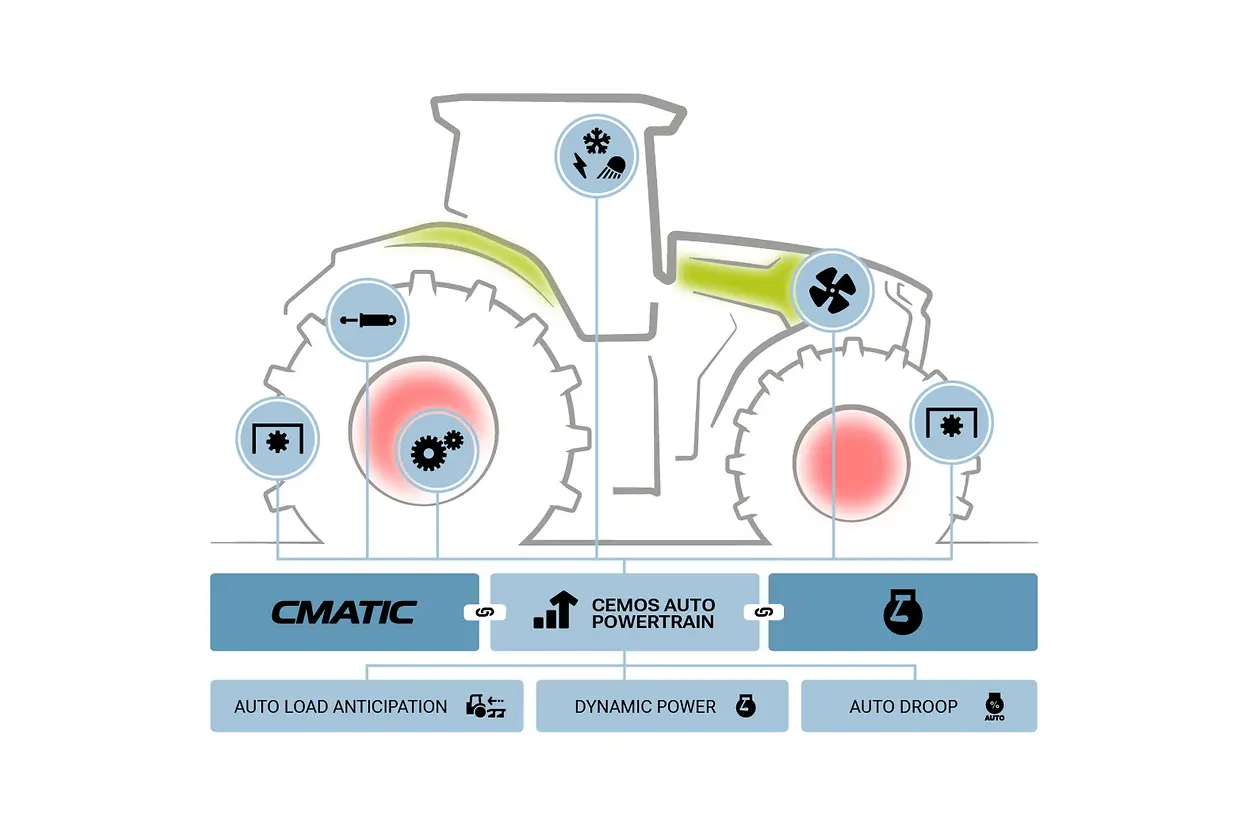
At idle, engine speed is reduced to 650rpm to save fuel and lower noise when the tractor is stationary. The cooling packages can be folded open for cleaning, and an optional reversible fan keeps the radiators clear of dirt and dust. The engines are approved for operation with hydrotreated vegetable oil (HVO), which CLAAS says enables a reduction in CO2 footprint of up to 90%.
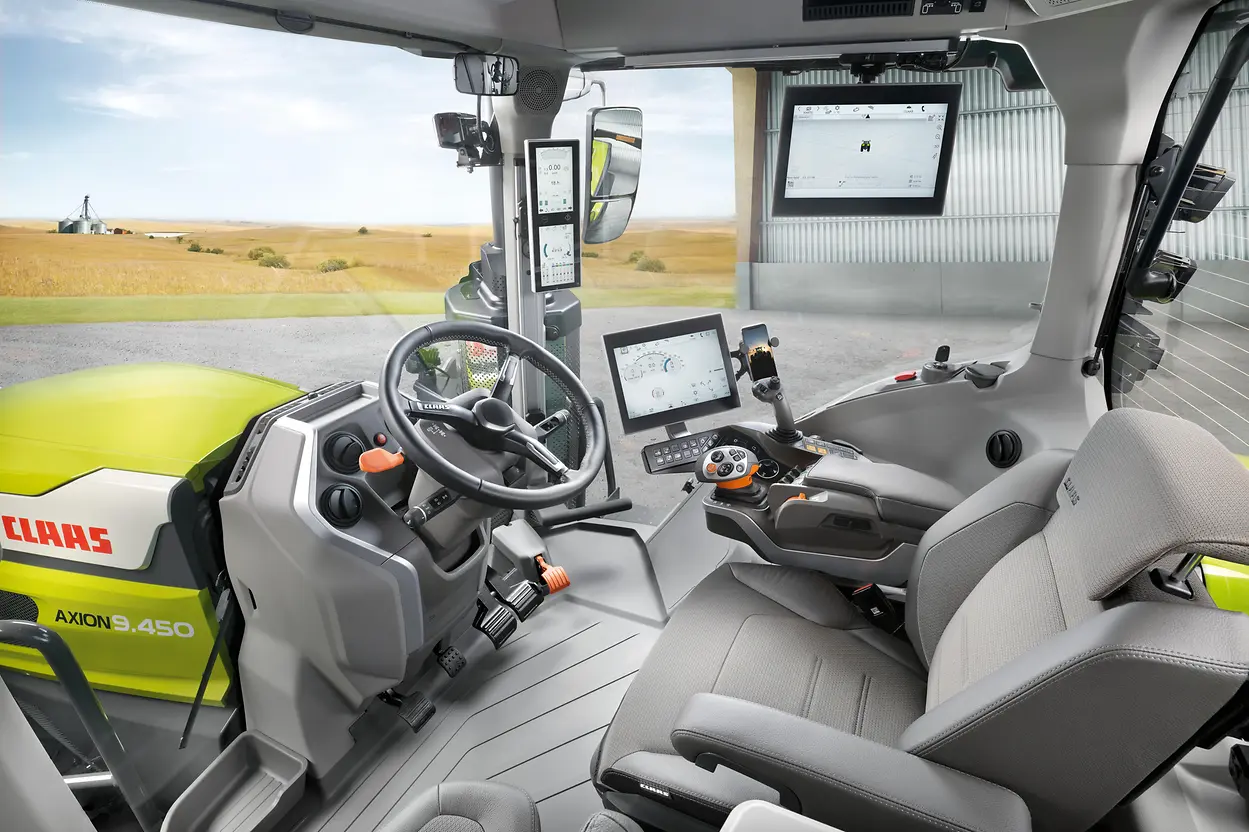
The range combines carried-over engine, transmission and axle hardware with a redesigned cab, a new electronics infrastructure and new driver assistance systems. The new cab features the Visor front design, reduced noise levels of up to a maximum of 67dB(A), premium seats and the new Cebis connect terminal. Other features include new tyre options, the Agritechnica award-winning adaptive driveline management system, Claas connect connectivity and the Ctic tyre pressure control system. In combination with a Vehicle Control Unit (VCU), fully automated operation with pre-planned work orders is possible within a framework of driver-supervised autonomy.
Images: Claas