

Eight decades ago the first three Zetor Z 25 tractors rolled off the production line in Brno. From post-war Czechoslovakia to more than 100 countries worldwide, we look back at how the Czech brand has evolved from a single model into a global tractor manufacturer – and what lies ahead with the new Series 6
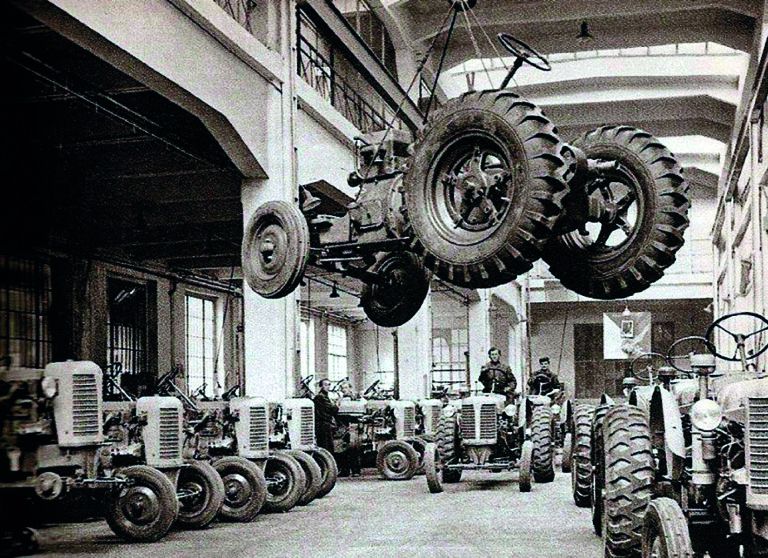
The story of Zetor begins on 15 March 1946, when three Z 25 tractors rolled off the production line at the Zbrojovka factory in Brno. Developed in the immediate aftermath of the Second World War, the Z 25 was a direct response to the urgent need for agricultural mechanisation across Czechoslovakia. The tractor proved popular almost immediately — and not just at home. By the 1950s, Zetor was already exporting machines to dozens of countries.
Unification and innovation
A pivotal moment came in the early 1960s with the introduction of the UR I unified model range. This brought more modern design solutions and, crucially, the standardisation of key components across the product line — simplifying both production and servicing. It was a philosophy that would become one of the brand’s defining characteristics.
The late 1960s saw Zetor build on this approach with the UR II series, offering more powerful machines capable of meeting demanding applications. Among these, the Crystal model carved out a place in tractor history as one of the first in the world to feature a safety cab. It also achieved one of the lowest in-cab noise levels of any tractor at the time.
Peak production
The 1970s represented the high-water mark for Zetor’s output. Tens of thousands of tractors left the factory gates each year, bound for markets across the globe. It was during this period that the company introduced its first six-cylinder tractor, producing 160hp — a step up in capability for the brand.
The fall of the Iron Curtain in 1989 brought sweeping change. Zetor embarked on a major transformation, gradually modernising its product portfolio and adapting to the realities of both European and global markets. The still-popular UR III series was introduced, and with the turn of the millennium came a new generation of machines — Proxima, Forterra, and modernised Major and Crystal lines — that would carry the brand through its modern era. These tractors retained Zetor’s traditional design philosophy of robust construction and simple operation, while also meeting growing farmer demand for higher performance, greater comfort and improved operational efficiency. In 2002, Slovak company HTC Holding acquired the business and remains its owner to this day.
The brand today
In recent years, Zetor has been undergoing a gradual transformation aimed at strengthening stability and tailoring production to current global market conditions. Key to this ongoing evolution is the new Series 6, introduced in 2025, which represents a modern generation of tractors built to meet current technological standards. It will be followed by the forthcoming Series 5, covering the 100–130hp power segment.
Beyond Europe, Zetor manufactures five additional model ranges — Compax, Hortus, Major, Super and VST Zetor 5011. The first four are designed for non-emission markets and are exported to Mexico, Latin America, Africa and Asia, while the VST Zetor 5011 is tailored specifically for the Indian market.
Celebrating in Brno
The company marked its anniversary with the public in April at the AgriShow exhibition in Brno, where selected historic Zetor models were displayed alongside the new Series 6. It was a fitting venue — just a short distance from the factory where it all began eight decades ago.
Today, Zetor tractors operate in more than 100 countries across every continent except Antarctica. Eight decades on from those first three Z 25s, tractor development in Brno continues to thrive.
This article first appeared in the May/June issue of iVT