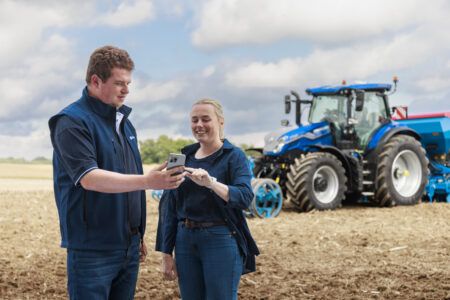



As machines become part of larger connected systems, the biggest risks now lie beyond the product itself, says Alan Berger, industry veteran and CEO of the on- and off-highway vehicle consultancy, abcg AB
What happens when your machines work perfectly but the system around them fails? That’s the new reality for leaders in the industrial vehicle world. Uncertainty no longer sits inside the machine, but rather lives in the networks, interfaces and infrastructure that make products function.
Managing today means looking beyond individual machines. It’s about understanding the broader ecosystem they operate in, spotting any weak points and designing solutions that perform even when the environment shifts. Modular designs, open interfaces and adoption strategies are no longer optional, they’re essential in a world where the sand keeps shifting under our feet.
From a business perspective, this means planning for multiple “might happen” scenarios and having clear contingency plans for those that feel less likely, but still plausible. The speed of change we are faced with in today’s fast-changing world makes going all in on a single outcome increasingly risky.
When the system, not the machine, sets the limits
Products no longer stand alone. They are part of larger systems, and those systems carry their own ambiguities that can impact on the success (or not) of the machine. Electrification is a great example. Electric machines work often quite well but their adoption is constrained less by the product itself than by the availability of charging infrastructure. If that it is missing, even the strongest machine cannot deliver.
With increasing connectivity, systems are becoming larger, more complex and less controllable by OEMs. Product design must now consider whether a bigger ecosystem exists, whether its elements work together with the product, and whether the whole thing functions in a way that makes sense for the customer. Assuming external factors will just fall into place is a risky product strategy.
“The system, not the machine, now sets the limit”
From a product perspective, modularity has never been more important. Properly executed, it simplifies design and manufacturing while enabling a wide range of configurations. This allows OEMs to respond quickly to fluctuations in component availability, shifts in regional economics and changing customer wants. In an environment where several variables are moving at once, that capability can be useful.
Closed systems versus open opportunities
Interfaces are another element to consider. Some OEMs pursue their own proprietary approaches and create “closed” systems. When this is done well the benefits are substantial. More often though, industry standards emerge and expand the market. Our own industry has seen this repeatedly. The three-point hitch didn’t start as a universal standard, but those who adopted it gained an edge as adoption grew.
Even when the technical elements are in place and the economics make sense, adoption is not guaranteed. Moving from a product to a system solution brings a different challenge: change management. Getting the machine right is necessary but not sufficient. A successful deployment depends on aligning incentives, reducing perceived risk and ensuring the solution fits naturally within the customer’s system.
That system extends beyond the machine to service models, dealer networks, financing structures and operator behaviour. If all these elements aren’t aligned even the best-engineered solutions will struggle to take hold. Adoption becomes as important as the technical solution itself.
Today uncertainty lives within the systems that enable machines to function. This has profound implications for how we plan, design and bring solutions to market. It doesn’t make the world any more controllable than it was, but it does make clear where to focus.
This column first appeared in the July/August of iVT