

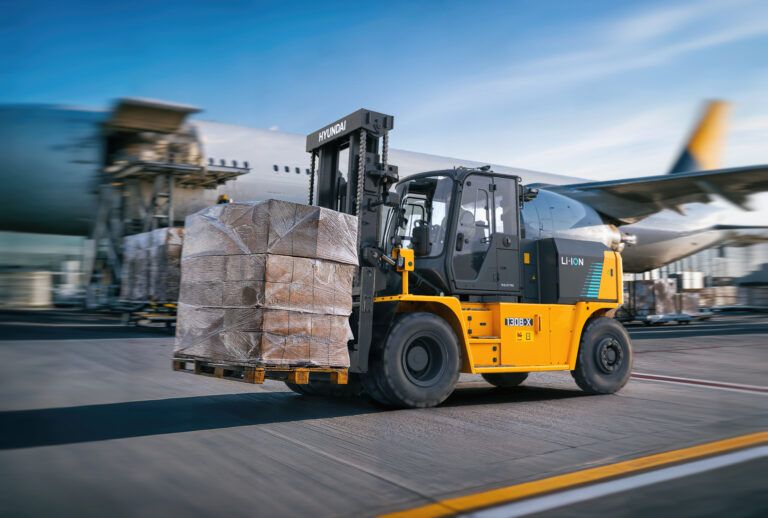
Hyundai Material Handling has completed its B-X high-voltage electric forklift range with the introduction of 10-13 tonne and 16-18 tonne models, giving the manufacturer an electric counterbalance line-up spanning 4-18 tonnes and extending electric availability into applications traditionally served by diesel trucks.
The B-X programme was rolled out in stages, beginning with the 4–9 tonne models launched in 2025. The latest additions, comprising the 100B-X, 120B-X and 130B-X LC600 together with the 160B-X and 180B-X LC600, complete the range and bring high-voltage electric forklifts into applications requiring higher lifting capacities and intensive outdoor operation.
Electric forklifts are well established in lower-capacity warehouse and industrial applications, but Hyundai says electrification becomes more complex as lifting capacities, operating hours and environmental demands increase. Higher-capacity trucks require significantly more power and battery capacity, while many of these applications involve continuous outdoor operation in changing weather conditions.
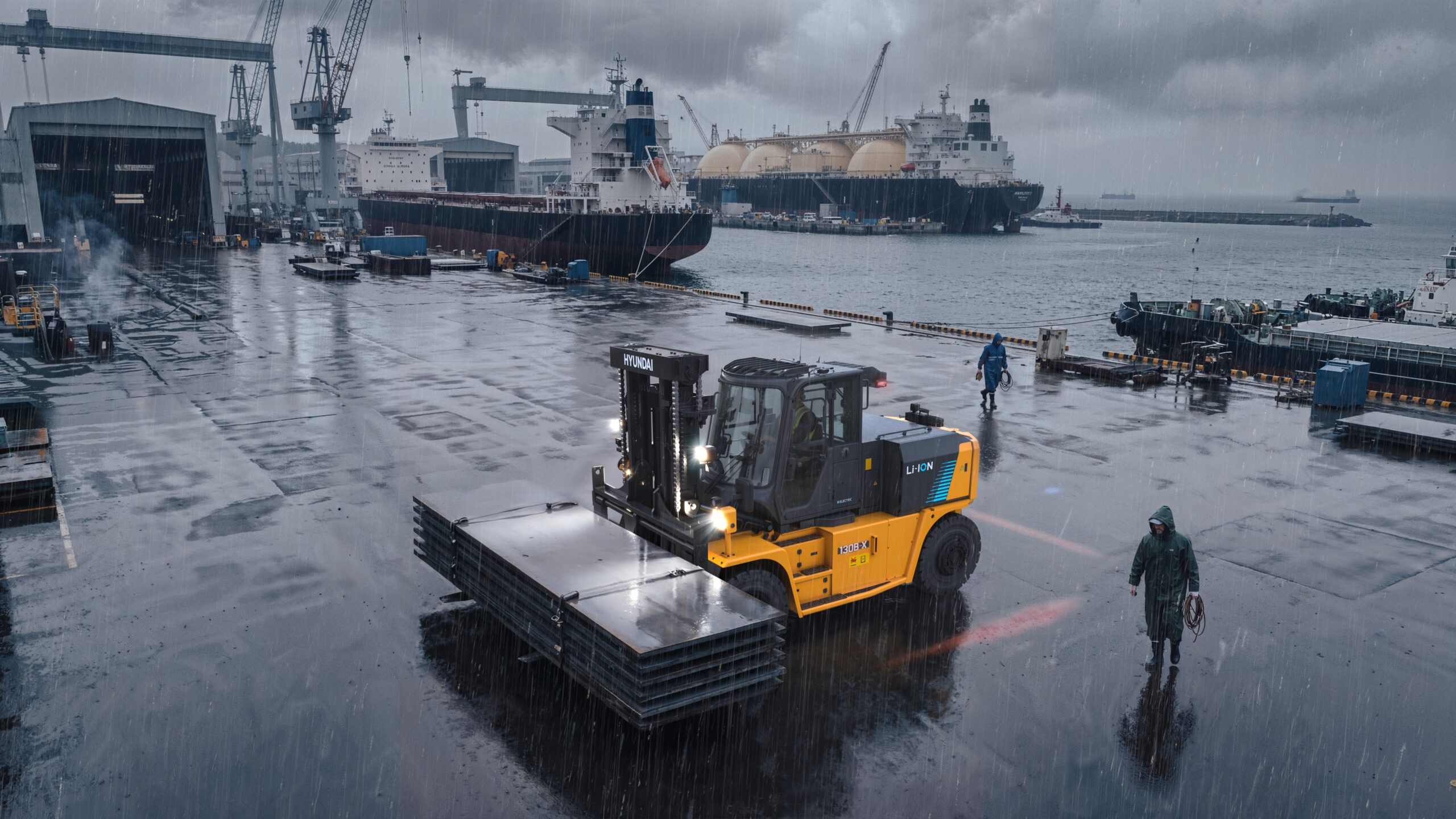
High-voltage battery architecture is central to the transition. The B-X range uses high-voltage systems ranging from approximately 309–348V in the 4–9 tonne models to 618V in the 10–18 tonne machines. Hyundai says the higher operating voltage delivers the power levels required for intensive handling while reducing electrical current, lowering heat generation and improving overall energy efficiency.
The heavier B-X models have been developed for sectors where diesel forklifts remain widely used, including ports, shipbuilding, timber processing, metal production, construction materials, manufacturing and logistics. In these applications equipment is expected to operate outdoors throughout the year, often in rain, cold temperatures and dusty environments.
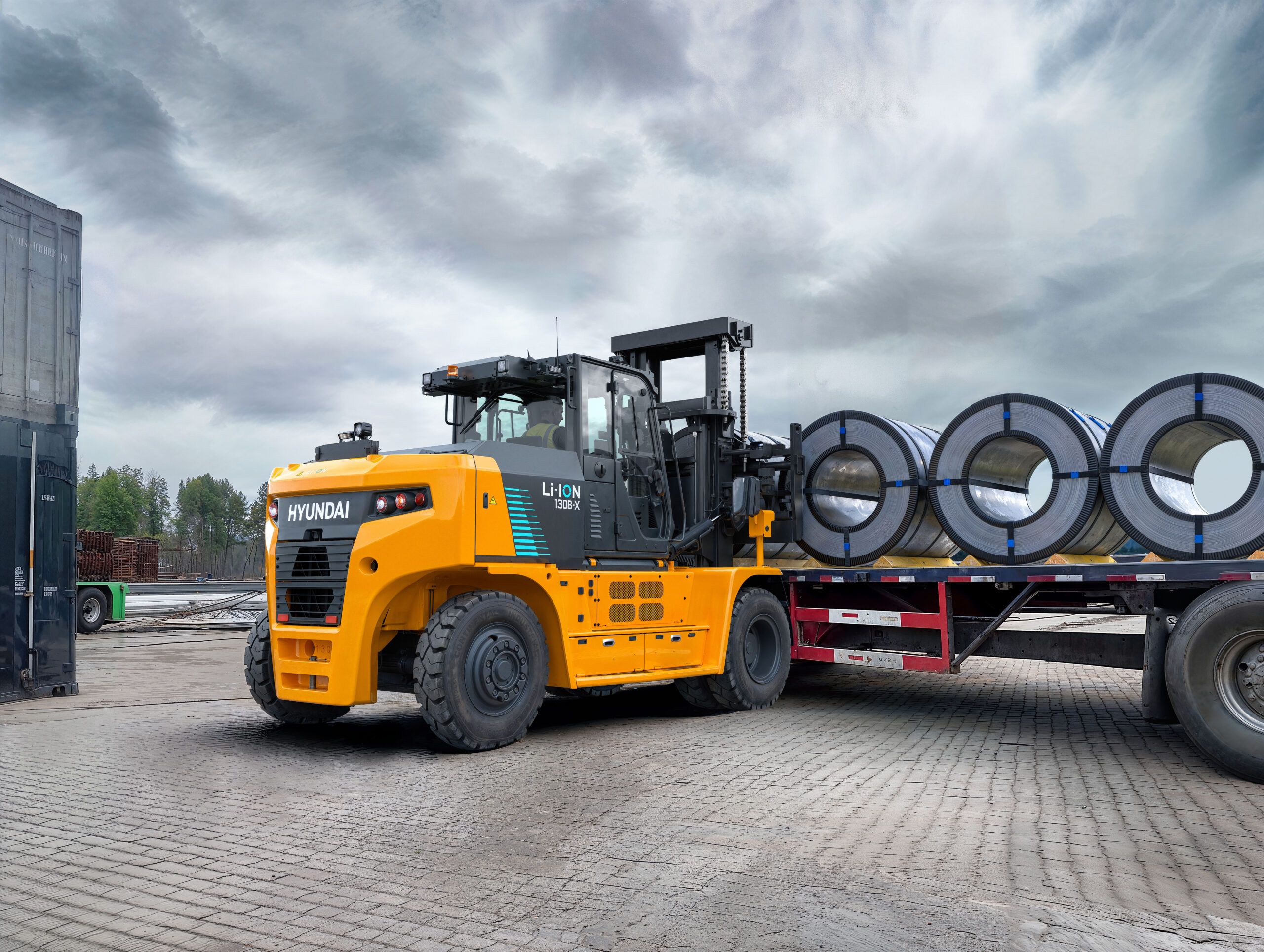
To meet these requirements, Hyundai combines established chassis and mast architectures with dedicated electric drivetrains, battery systems and control technology. Key components are protected to IP67, while selected electronic systems achieve IP69K protection. The battery system combines liquid cooling with dedicated thermal management and integrated heating to maintain operating temperatures across a wide range of conditions, and the trucks have undergone environmental testing including water spray, flooding and cold-climate endurance assessments.
Hyundai reports that the trucks use water-cooled permanent magnet motors and advanced control systems designed to provide travel speeds, lift speeds and gradeability comparable with diesel-powered equivalents. The manufacturer says the high-voltage architecture also supports fast-charging capability and extended operating times, allowing the trucks to be integrated into intensive multi-shift operations where appropriate charging infrastructure is available.

Raymond Galavazi, senior product manager at Hyundai Material Handling Europe, says: “Completing the B-X range means that electrification is no longer limited to the lower-capacity forklift segments. Customers across a wide range of industries can now consider high-voltage electric trucks from 4-18 tonnes, also for demanding outdoor applications where high capacity and intensive operation are required.”
Hyundai says the completion of the B-X range reflects a wider trend within the European material handling sector, as electric powertrains gradually move beyond warehouses and distribution centres into heavier-duty industrial applications previously considered difficult to electrify.
Image: Hyundai Material Handling