


How can OEMs successfully navigate the energy transition across diverse off-highway applications? Engine manufacturers provide flexible multi-energy strategies spanning HVO compatibility, hydrogen combustion and modular platforms to accelerate alternative fuel adoption
Off-highway OEMs face mounting pressure to decarbonise their machine portfolios while maintaining the performance and reliability their customer’s demand. With Stage VI emissions regulations on the horizon and sustainability commitments deepening, OEMs are now seeking powertrain solutions that can perform across a range of applications.
This challenge extends beyond simply swapping engines. OEMs must navigate infrastructure limitations, fuel availability and the complex duty cycles that define off-highway operations. A combine harvester operating in remote farmland faces entirely different constraints to an excavator working on a construction site, yet both require power solutions that meet increasingly stringent environmental standards.
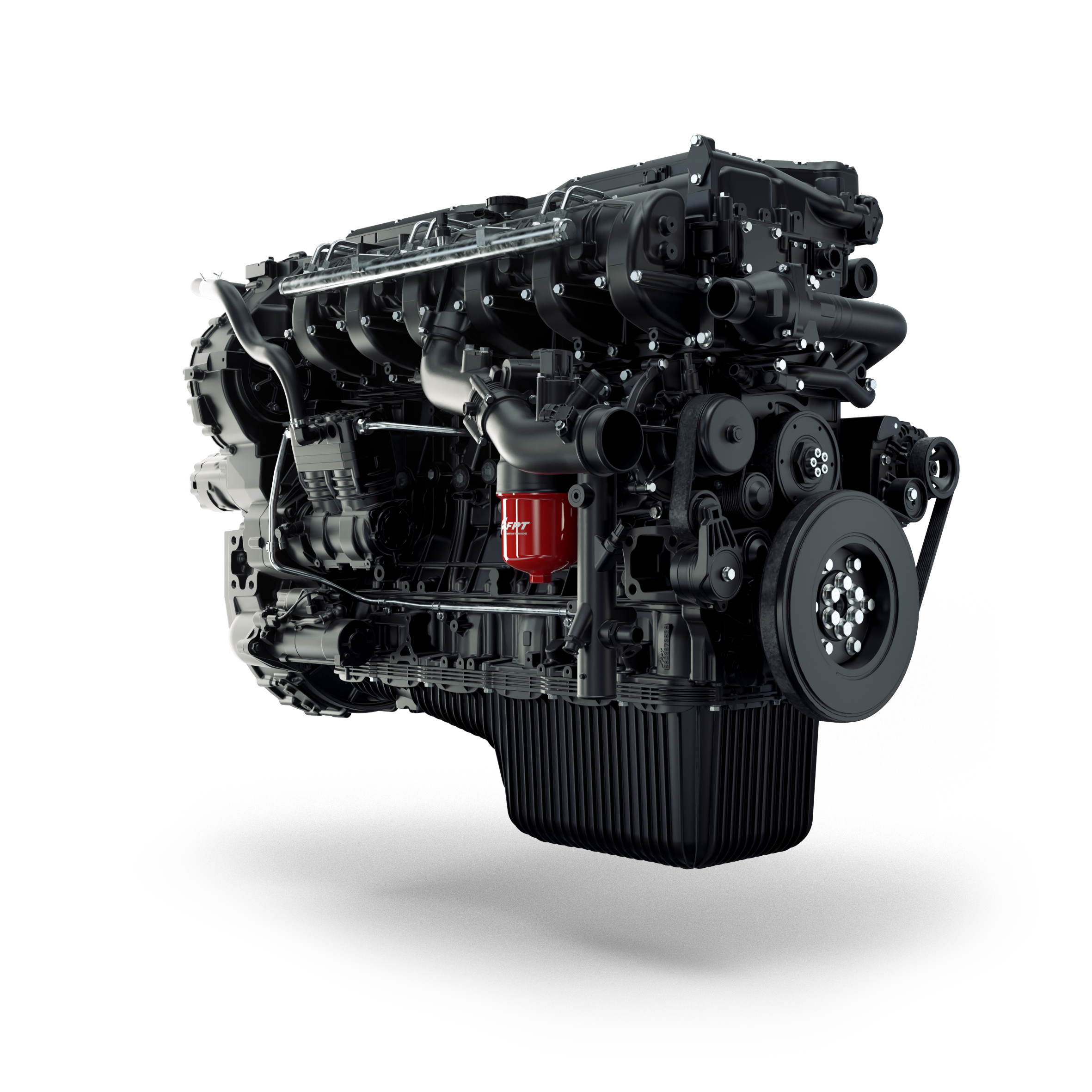
Engine manufacturers FPT Industrial, AGCO Power and Cummins are responding with multi-energy strategies designed to give OEMs maximum flexibility. Each supplier is taking different but comparable approaches to lowering carbon emissions, offering solutions such as drop-in HVO compatibility, or modular platforms that can switch between hydrogen and diesel with minimal machine redesign.
Building a multi-energy momentum
“Our product line follows a multi-energy approach to find the right mix of solutions designed to reduce global emissions and drive the energy transition towards a cleaner future, always alongside our customers,” says Andrea Gerini, head of open innovation at FPT Industrial. “On the one hand, we continue to develop new internal combustion engines, using increasingly sustainable fuels such as biomethane, hythane, hydrogen and HVO. On the other hand, we carry on our research and production of new electrified zero-emission solutions, compatible with both on- and off-road applications.”
“The energy transition is not in question anymore. The question is how to support this transition with solutions that can be accepted economically”
This diversified strategy reflects the complex reality of off-highway operations. Unlike on-road applications, industrial vehicles face extreme variations in duty cycles, operating environments, and infrastructure availability. A single solution cannot address the breadth of applications from construction sites to remote agricultural operations. AGCO Power’s approach exemplifies this thinking. “The way we approach the changing market boils down to our slogan: Wider Spectrum of Power. It describes the need for diverse solutions to meet the individual needs of different customer groups and locations,” says AGCO Power product specialist Tapani Katila.
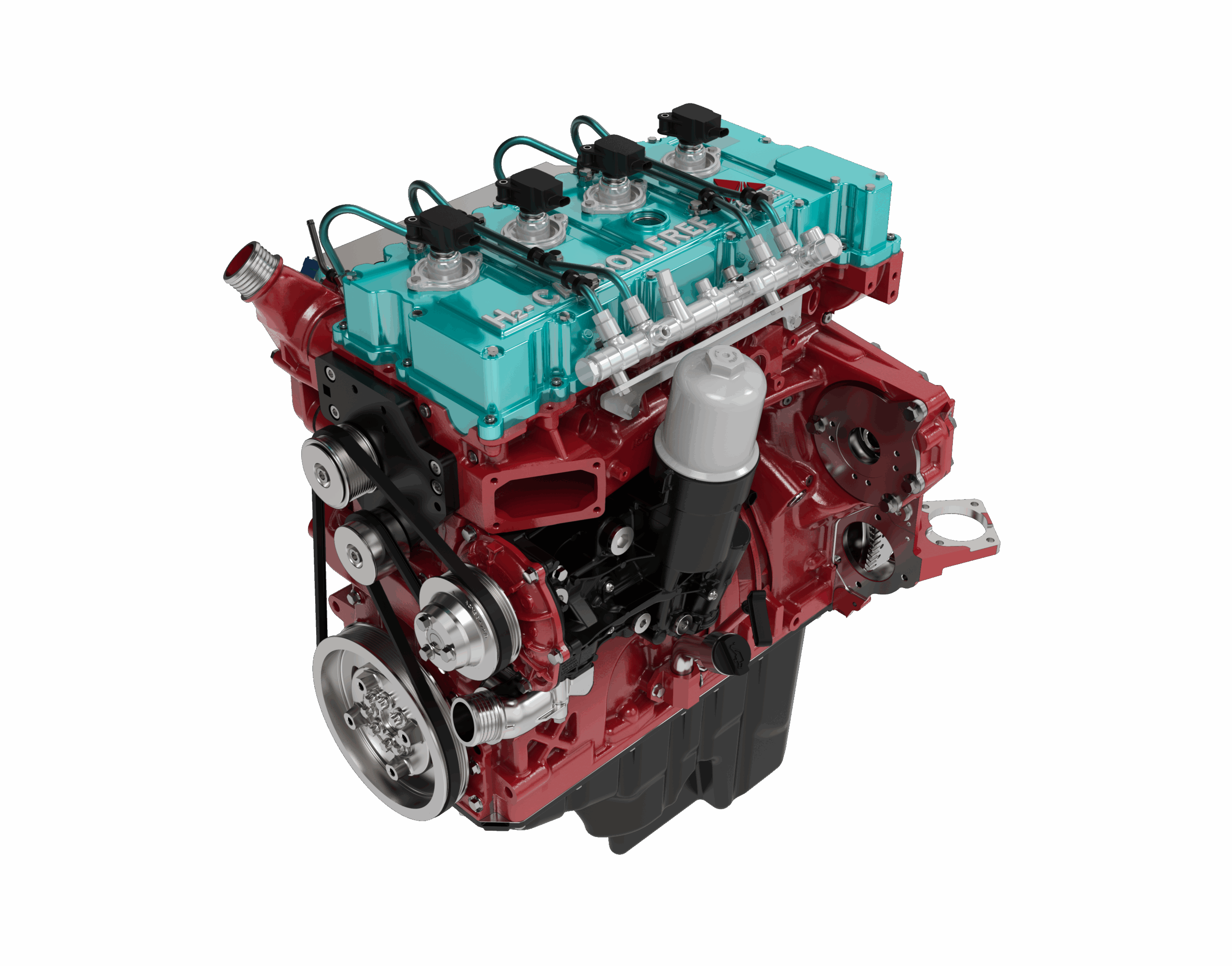
AGCO’s Core engine platform demonstrates this philosophy in practice. “Applications under 100 horsepower are most suitable for electrification. With current battery technology weight and space-claim limit the implementation of battery-electric solutions in heavier applications. We believe applications requiring over 100 horsepower will likely be powered by hybrid solutions or combustion engines running on alternative fuels, like our Core engine,” says Katila.
HVO leads alternative fuel adoption
Among the available alternative fuels, hydrotreated vegetable oil (HVO) has emerged as the most readily adoptable solution for existing fleets. Both FPT Industrial and AGCO Power have made all their engines HVO-compatible, offering immediate decarbonisation benefits without requiring infrastructure changes. “HVO is a very interesting candidate to support the defossilisation pathway of diesel engines. The final product is fully compatible with current engine technologies, making it a drop-in solution. Compared to biodiesel (e.g. FAME), HVO can be used in whatever blend with conventional diesel and also as neat product,” says Gerini. “Due to its chemical composition, it brings excellent properties for a clean and efficient combustion, but the real benefit comes when considering the CO2 performance under a well-to-wheel perspective. HVO brings a CO2 emissions reduction of up to 85% compared to conventional diesel measured at well-to-wheel (WtW) level, demonstrating that the decarbonisation process can also be leveraged on conventional engine technologies, just by using the right energy carrier.”
AGCO Power’s decade-long experience with HVO has also demonstrated practical advantages. “Compared to conventional diesel, HVO has a higher cetane number which means that it combusts more easily – for example in colder climates,” says Katila. “ This means it burns more purely and produces less soot, and more importantly results in lower particle emissions. From a practical point of view, HVO has a much longer shelf life compared to conventional diesel.”
Hydrogen combustion for demanding applications
While HVO addresses immediate needs, hydrogen combustion engines are being developed for the most challenging off-highway applications. FPT Industrial’s displacing tonnes of snow on high ski slopes, sometimes at very high altitude under severe weather conditions. Testing conditions are quite severe, and specific solutions have been conceived to ensure the machine gradeability and the cold-start conditions. We used our expertise in gaseous engines to develop the first hydrogen version of our 13-litre engine, targeting diesel equivalent performance at the highest efficiency, to support the hard mission of these machines.”
Fuel flexibility
A key trend emerging across manufacturers is the development of modular engine architectures that can accommodate multiple fuel types without requiring complete redesigns.
In April, at Bauma in Munich, Cummins showcased this approach with its next-generation X15 engine, a 15-litre engine with interchangeable heads for hydrogen and diesel operation. “The cool thing about this is that our OEMs can determine if they want hydrogen or diesel for their future build products, and they don’t have to massively reconfigure the equipment to accommodate that,” Sarah Myers of Cummins told iVT at the event. “Walking around Bauma, you see all this diverse equipment that typically requires redesigns for different fuel types. To be able to offer something like this to OEMs where they can have the right solution, no matter where they’re operating, is really valuable.”
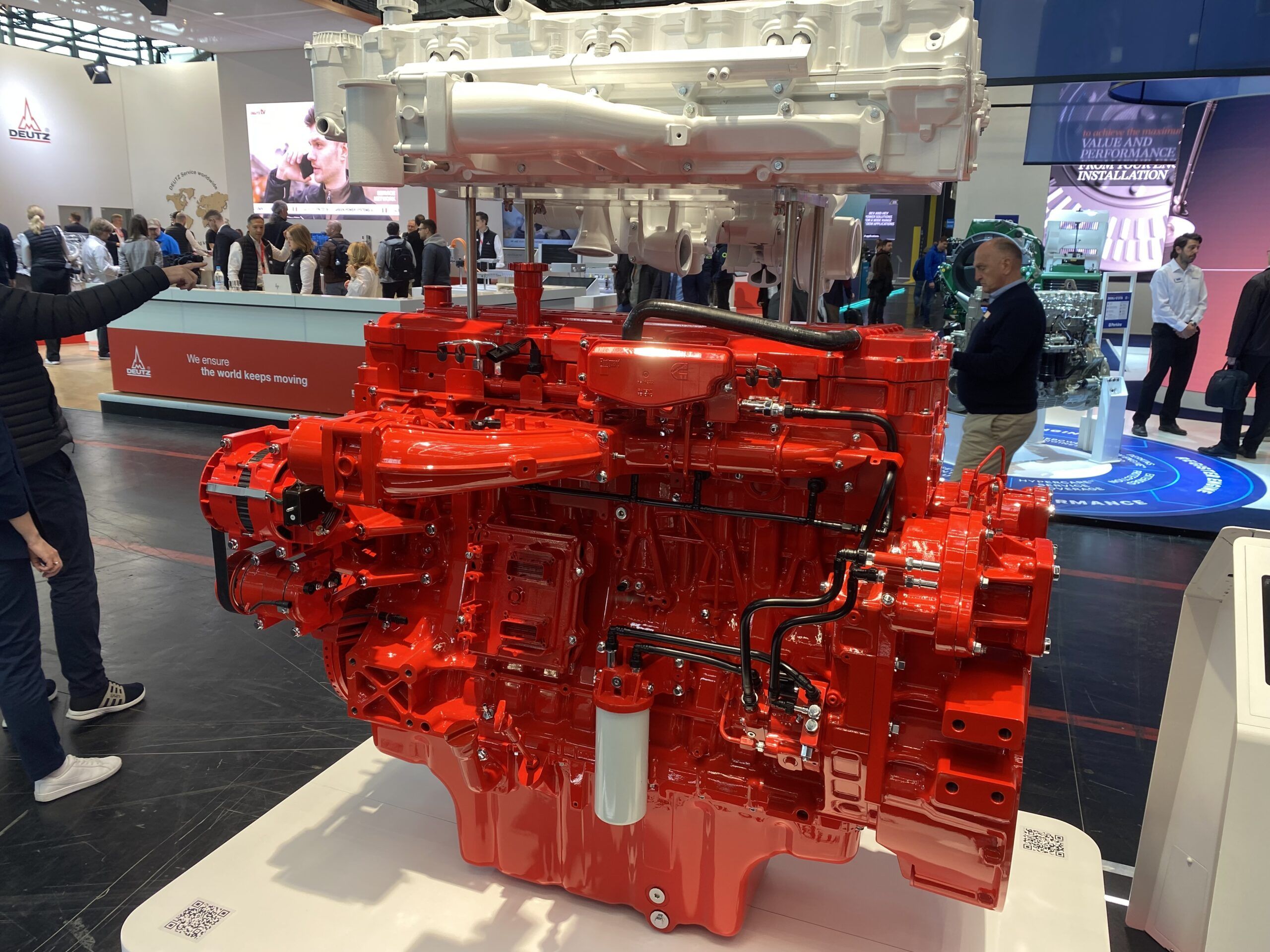
AGCO Power’s Core platform also aims to accommodate different fuel types within the same envelope. “The foundation of Core engines lies in the placement of the camshaft in the cylinder head,” says Katila. “This design choice offers greater flexibility in configuring and positioning valve train components. For example, it allows for the development of distinct designs for gaseous and liquid fuels without needing to consider the constraints of push rod placement.”
Diesel-electric hybridisation has been thought of in the past as a solution to the limitations of battery power in larger machines. However, burning diesel even in small amounts is looking far from future proof. AGCO Power’s eHydrogen prototype provides a zero-emission hybrid alternative by combining electric systems with hydrogen combustion. “This prototype was developed to answer the growing demand for reducing CO2 emissions and to showcase the capabilities of the Core engine platform,” says Katila. “It combines the best of combustion and electrification – fast response and low NOx emissions thanks to the hybrid system, and reliability and cost-efficiency of the combustion engine platform. In fact, the prototype uses 80% of the same components as the diesel serial production version of the engine.”
“The foundation of core engines lies in the placement of the camshaft in the cylinder head. This design choice offers greater flexibility in configuring and position valve train components”
Infrastructure challenges
Despite the major technological advances, infrastructure limitations continue to constrain alternative fuel adoption, particularly for hydrogen applications. “We’re confident in the potential of our hydrogen combustion engine, but several market-related challenges still need to be addressed,” says Katila. “While hydrogen shows great promise as a fuel, the most significant hurdle is the lack of infrastructure – especially in remote areas. For hydrogen to become a viable option, the production capacity of green hydrogen from sustainable sources must increase substantially. Another key factor is cost; hydrogen must become competitive with existing alternatives such as electricity and liquid fuels.”
However, innovative solutions are emerging, and AGCO Power sees opportunities in their expertise with power generation. “At Agritechnica in 2023 we shared our vision for a microgrid concept, which could improve the energy independence in remote locations, better enabling the charging of electric equipment,” says Katila.
Adoption drivers and barriers
The receptivity of OEMs to alternative fuel technologies varies based on economic factors. “All sectors are asked to contribute to a defossilisation pathway, the energy transition is not in question anymore,” says Gerini. “The question is how to support this transition with solutions that can be accepted economically, considering both the cost of the machine but also from an operational cost standpoint.”
Katila agrees, highlighting the importance of cost considerations for OEMs. “At the end of the day our customers run businesses, and their operations need to be sustainable not only environmentally but also financially,” he says. “Cost is still a challenge with alternative fuels and power solutions, which limits their adoption rate. A major driver in the past has been legislation, so we would like to look to governmental actors for additional support, but infrastructure requirements and plain old habits also need to be taken into consideration.”
Regional variations
Katila predicts the path to alternative fuel adoption will vary by region, driven by local resources and regulation. “In some areas, uptake could be particularly strong. For instance, South America where different biofuels show promise,” he says. “However, on a global scale, growth may be constrained by population pressures. As the demand for food increases, arable land is more likely to be allocated for food production rather than cultivating crops for sustainable fuel.”
FPT Industrial’s global perspective reveals additional regional opportunities. “Our natural way to think multi-energy is also the result from the global footprint of our company. Some solutions like HVO, bioCNG/LNG, hydrogen may have a global market, but there are also other interesting options in some areas like bioethanol in Brazil,” says Gerini.
Powering the future
In the short- to medium-term manufacturers are preparing for a diverse energy landscape in the future rather than convergence on a single solution. “Considering the diversity in applications in the offhighway sector, we need to have a complete panel of solutions leveraging high-efficient conversion, flexibility in use, reliability and capacity to easily adapt to local availability of fuel. We can imagine a progressive switch from conventional fuels to biogenic fuels, then to synthetic fuels, including e-fuels, once sustainable hydrogen and CO2 become available at industrial scale,” says Gerini.
AGCO has set concrete targets to drive this transformation. “In support of our sustainability commitments and in response to evolving market needs,” says Katila. “AGCO has set a goal to introduce more than 10 battery-electric and/or alternative fuel capable products by 2033. This ambitious target highlights our dedication to accelerating the adoption of clean energy solutions within our portfolio. We are committed to improving powertrain efficiency by at least 5% on new products by 2033.
As the off-highway industry navigates this multi-energy future, success will depend on manufacturers’ ability to provide flexible, cost-effective solutions that meet diverse application needs. The transformation is underway, driven by regulatory requirements, sustainability commitments, and increasingly advanced technologies that make alternative fuels a viable reality for the off-highway sector.
This article first appeared in the October issue of iVT