

Scanreco
Hall 18, Stand D/7
New EU machinery and cybersecurity legislation is pushing OEMs to adopt control platforms built with safety and security by design
With the European Union tightening its legislation on machine safety and cybersecurity, introducing the Machinery Regulation and Cyber Resilience Act next year, the regulatory landscape for machine designers faces major changes.
One of the biggest concerns is cybersecurity moving from a specialist IT issue into the core machine-safety discussion. Scanreco urges OEMs to look for trusted control platforms that help reduce complexity, engineering effort and compliance risk, and set out early to help eliminate uncertainty around wireless remote control solutions. For OEMs the direction is clear: safety, security and compliance must be considered together early in machine development.
Rethinking integration
As a result of the new EU requirements, what was previously treated as an add-on after the machine was built, such as a remote control, can no longer be treated as such. The system and its integration must be considered as part of the machine’s overall safety and cybersecurity architecture.
This places pressure on engineering teams already managing performance, usability, certification, cost and time to market. Selecting a remote control system that has been designed from the start with both safety and cybersecurity in mind does not transfer responsibility for the finished machine away from the OEM, but it can provide a stronger foundation for the machine-level risk assessment and integration work.
Cybersecurity by design
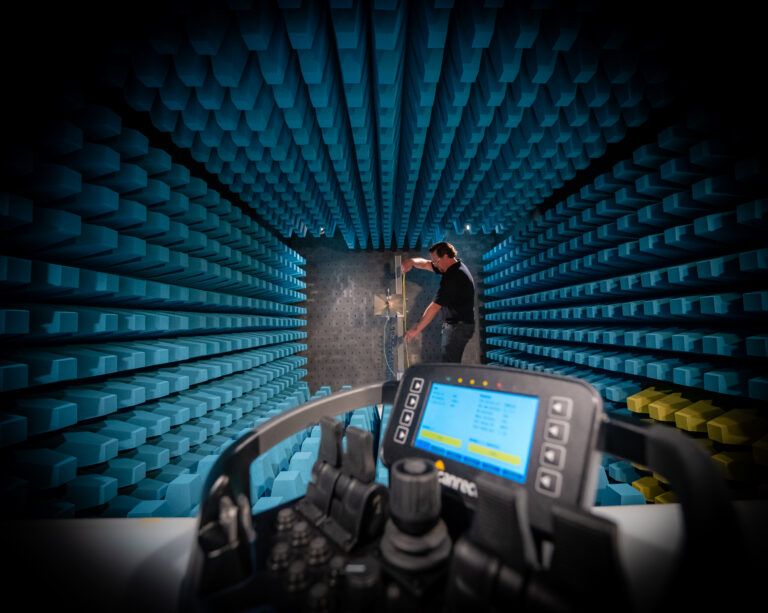
Scanreco’s G6 remote control platform was developed to meet the evolving machinery landscape. It brings functional safety and cybersecure-by-design communication into a common architecture for demanding mobile machinery. The communication between transmitter and receiver is multi-layer-encrypted and protected, helping machine builders address control integrity alongside the requirements for safe machine operation.
“On any type of machinery, a remote control command must be both functionally safe and protected against manipulation,” says Martin Westerling, product owner of Scanreco’s G6 platform. “That is why we had cybersecure-by-design communication built into the G6 platform from the outset in the form of our third-party approved safety solution SISP, which stands for Scanreco Integrated Safety Platform.”
Platform breadth
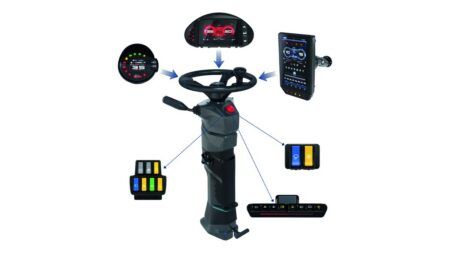
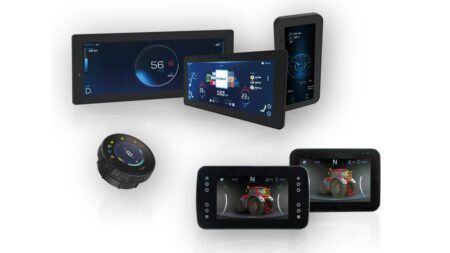
Scanreco’s G6 platform is used across several machine categories, including demolition robots, truck-mounted cranes and autonomous machines used in agriculture and construction. With the new hand-held models Rocket Plus and OneGrip complementing the bellypack models, the same platform also supports equipment such as crushers, suction excavators and other heavy mobile machines used in exposed environments. This breadth allows machine builders to select different transmitter models, control features, HMIs and branding while retaining a common technological base. For OEMs managing several product families, that can simplify engineering choices and support a structured approach to future regulatory work.
Remote operation relevance
As the evolving machinery industry produces smarter and more autonomous machines, remote operation continues to provide a practical benefit. Traditionally, it has allowed operators to choose a position with better visibility and greater distance from dust, falling material, moving equipment and restricted working areas. This is relevant both indoors around powerful concrete-processing machines and outdoors around crushers, excavators and cranes. As machines evolve, the operator role remains important, though with a shifted focus towards monitoring and well-informed decisions based on data transferred from the machine’s sensors.
As machinery becomes more connected and software-driven, cybersecurity weaknesses can no longer be treated separately from safe machine behaviour. For remote control applications, a cybersecure-by-design control platform can reduce uncertainty and provide a more robust starting point.