

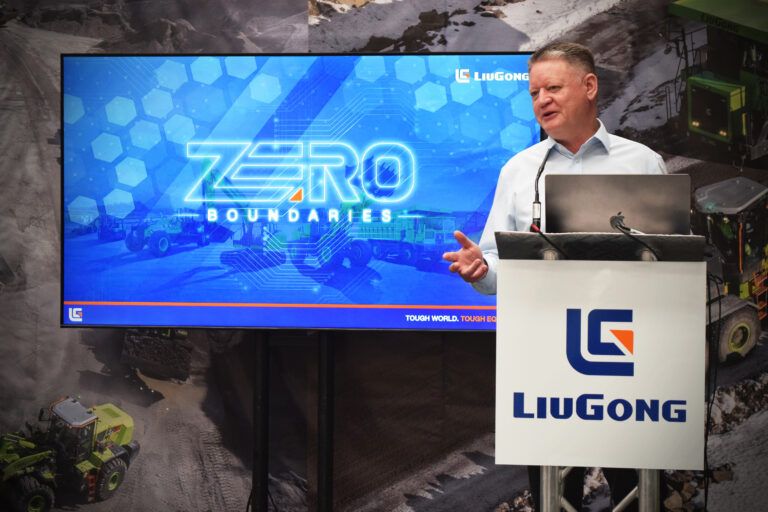
Nearly three years into the job, LiuGong UK managing director, Dean Thornewell has made visibility his mission. He tells iVT International how a rise in brand awareness, a fully electric quarry line-up shown at Hillhead, autonomous machines on the horizon and a rapid pace of new model launches are lifting the OEM’s profile
LiuGong is not short of visibility in the UK, but for years the scale behind the name went unnoticed. “We were one of the biggest companies in the world that nobody had heard of,” says Dean Thornewell, managing director of LiuGong UK, summing up the challenge he inherited when he joined the business at the beginning of 2024.
Thornewell came to LiuGong from the automotive industry and many years in mining, latterly with Joy Global and then Komatsu following its acquisition of the surface and underground specialist. LiuGong UK has existed since 2019, when the corporation acquired its former UK dealer, but Thornewell felt it had further to travel. “I’ve been building on what was a firm foundation, but it just wasn’t moving fast enough,” he says. Raising the pace has meant a commitment to developing new models, a sharper focus on target sectors and, above all, greater brand awareness.
The electric case
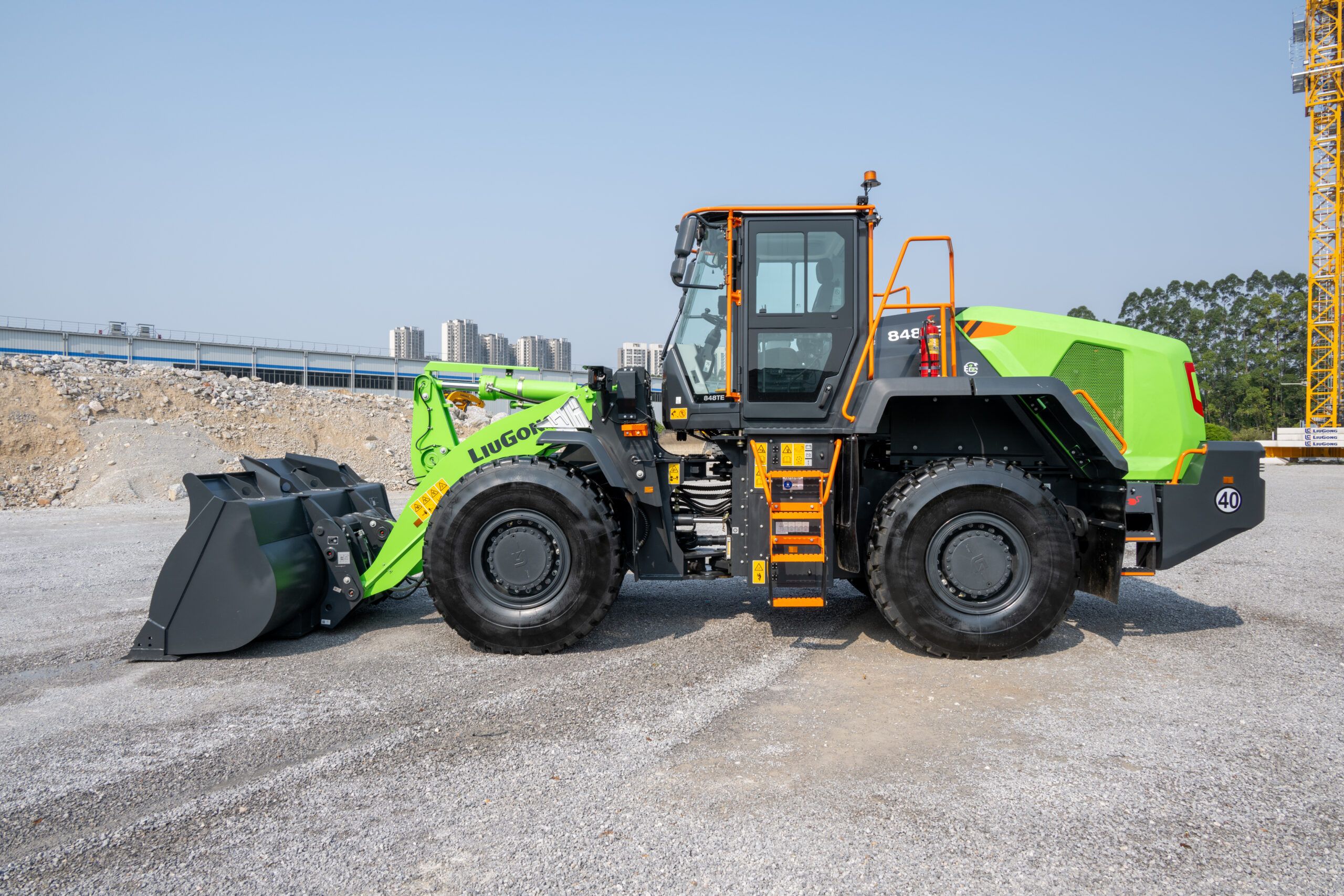
That awareness took a visible step forward at Hillhead this summer, LiuGong’s third appearance at the quarrying show and its most ambitious. “Every year that we have done it, we push the boundary again,” says Thornewell. “From rigid dump trucks to motor graders to excavators to wheel loaders, all the products that we demonstrated were 100% battery-electric machines, showing that we can now deliver a battery-electric quarry solution.”
Electrification sits at the centre of LiuGong’s identity. The company leads its domestic Chinese market for battery-electric wheel loaders and adoption has been striking in other markets such as Turkey. In the UK, the Lower Thames Crossing has been a catalyst. The £10 billion road and tunnel scheme linking Kent and Essex beneath the river east of London aims to be the first major UK infrastructure project built without diesel machinery on site. “We’ve been developing at a fast rate the different size excavators and dump trucks and other products that are needed to deliver that project with zero tailpipe emissions,” says Thornewell.
Quarrying, aggregates and recycling lend themselves particularly well to electric power, and some customers are closing the loop entirely. “We’ve got customers out there now who are able to generate their own electricity for their operation,” says Thornewell. “You’ll have a mine operation that has no diesel requirements, no fuel needs, because they’re able to generate sufficient renewable energy to run their operation.”
Where adoption lags, Thornewell argues, the explanation is often capability rather than appetite. “There are other OEMs out there who have electric products, but they don’t necessarily have the same capability as we do,” he says. “Unless your battery electric offering is equal to or better than what exists in the market today, then the rate of adoption is going to be much more of a challenge.”
On LiuGong’s own machines he is unequivocal: “The equipment today, battery sizes and run times are meeting the needs of the customer because they run a full shift or they run a shift and a half.”
Thornewell sees room to grow across most segments, singling out recycling, quarrying, mining and government-backed infrastructure, where zero tailpipe emissions are increasingly specified. “We’ve got a solution for pretty much every application now,” he says.
Autonomy on the horizon
Machine intelligence is the next front. LiuGong already has autonomous machines running in China and projects underway across its network, the UK included. “I’m involved with one of our customers working on an application. I anticipate we will have autonomous machines working in the UK as early as next year,” says Thornewell.
Weeks, not years
The single greatest advantage of belonging to a fast-growing global corporation, in Thornewell’s telling, is speed. “When will that new product be launched? That conversation is a conversation about weeks and months. It’s not about years,” he says.
The loop between customer and factory is tight. A demonstration machine comes to the UK, a customer identifies improvements, and the feedback travels to China. “Within days, it’s done,” says Thornewell. To feed that cycle, LiuGong has put engineering resource in the market rather than leaving it all at headquarters. “We have industrial designers, we have R&D engineers, we have product engineers in the LiuGong UK organisation,” he says.
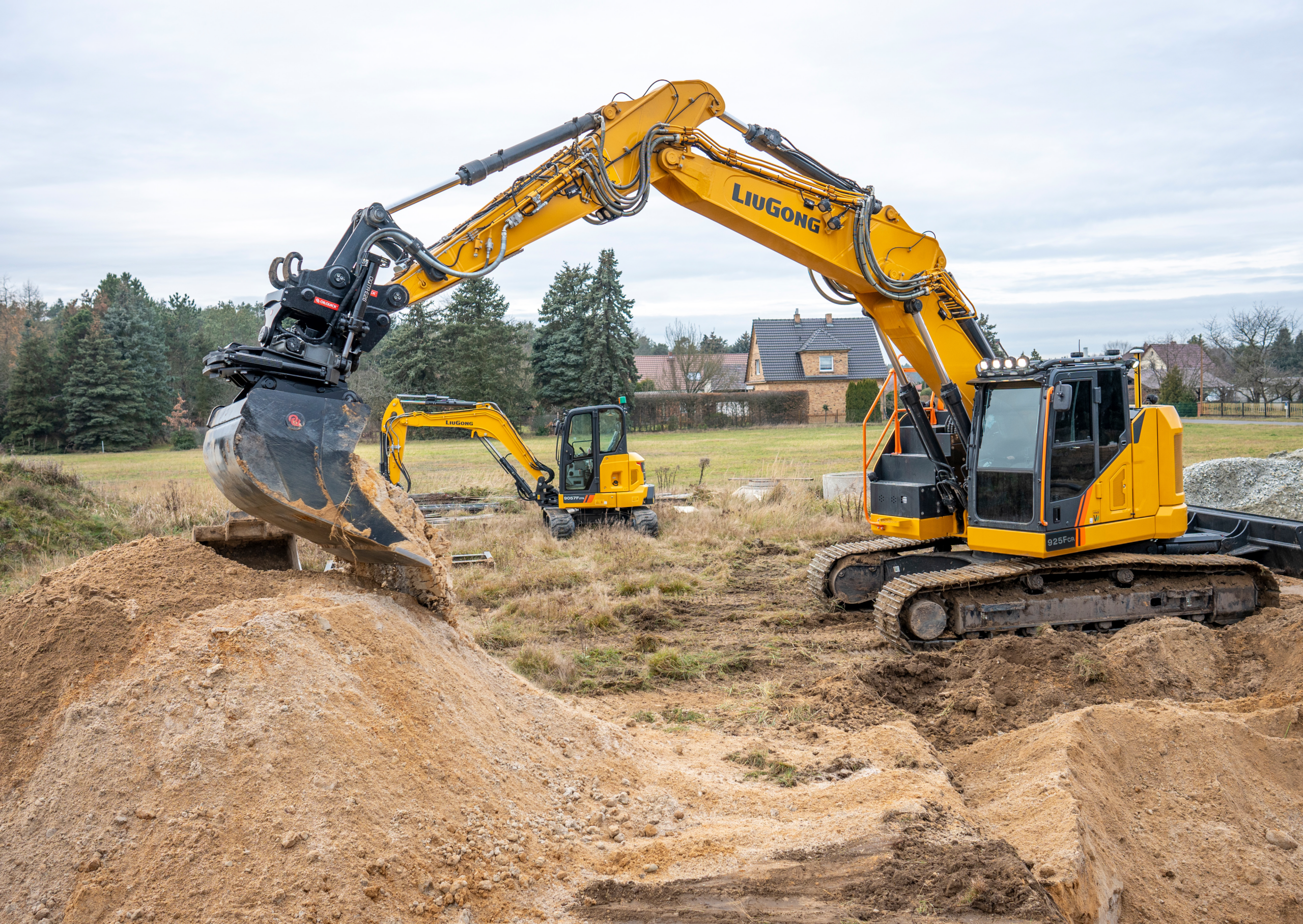
The UK is seen as an important proving ground. “The UK and the European markets really are classed as the mature market, so the standards are very much set for the customer expectation,” says Thornewell. “If it works in the UK, Germany or France, for example, then it’s likely to work everywhere else in the LiuGong footprint.”
The ambition
Ask where Thornewell wants LiuGong to be in five years and the answer is about perception as much as position. “We’re very much edging towards that feeling of being the premium Chinese brand, not just in the UK but on a global scale,” he says. Market share, he says, is climbing and customers are beginning to reflect the brand’s standing back to the company.
What keeps Thornewell going is knowing what’s coming next from the OEM. “LiuGong has just got this incredible technology bow wave coming. I can’t see the end of this technology wave that’s happening.” For a business he once described as one of the world’s best-kept secrets, being noticed is certainly no longer a problem for LiuGong.
Listen to iVT‘s exclusive interview with Dean Thornewell on The Off-Highway Podcast HERE
This article first appeared in the October issue of iVT International